
Table of Contents
- The Real Price of Cheap Gear: Why ‘It Depends’ Isn’t an Answer
- Durability vs. Weight: The Core Trade-Off in Expensive Camping Gear
- Cost-Per-Use: The Math That Ends the Budget vs. Premium Debate
- Repairability and Warranty: Why Field Repair Beats Replacement
- Best High-Performance Hiking Gear: Where Your Money Actually Goes
- How to Maintain Camping Equipment So It Outlasts Its Warranty
- Rental vs. Buying vs. Second-Hand: Matching Gear to Trip Frequency
- Conclusion: When Expensive Camping Gear Is Worth It (and When It Isn’t)
- Frequently Asked Questions
Last Updated: September 14, 2026
The Real Price of Cheap Gear: Why ‘It Depends’ Isn’t an Answer
Ask ten hikers whether expensive camping gear is worth it and you’ll get ten versions of “it depends.” That answer is useless when you’re standing in a store trying to decide. This guide from Adventurers Pulse replaces the shrug with a framework: cost-per-use math, a repairability index, and clear thresholds for when premium gear pays for itself.
The core tension is simple. Cheap gear costs less today and more later. Premium gear costs more today and less later. Which side you land on comes down to trip frequency, terrain, and how much a failure would cost you.
Below, we’ll show you exactly how to run those numbers for your own trips.
Durability vs. Weight: The Core Trade-Off in Expensive Camping Gear
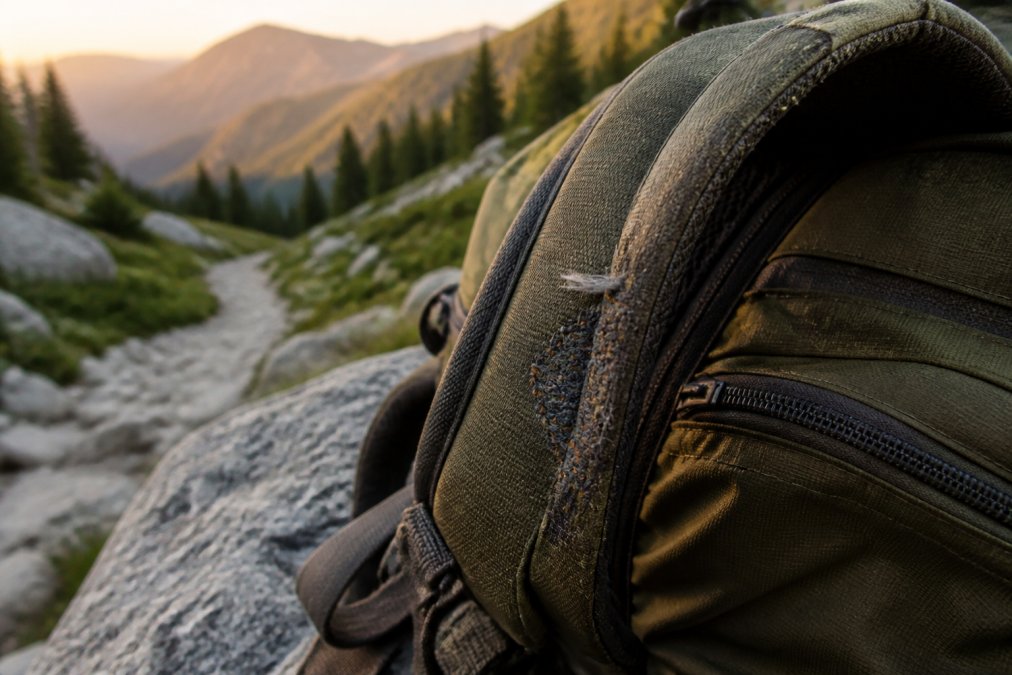
Lightweight gear and durable gear pull in opposite directions. Stronger fabrics weigh more; lighter fabrics wear faster. Premium gear earns its price by narrowing that gap through better materials and construction, not by eliminating the trade-off.
The useful way to think about it: every piece of gear sits somewhere on a curve between grams and seasons. Your job is to find the point on that curve where the weight penalty stops buying you meaningful durability, and the durability premium stops costing you meaningful weight.
Three specifications carry most of the weight here: denier, waterproof rating, and the fabric/coating system itself. Understanding them tells you more than any brand name.
Denier, Waterproof Ratings, and What They Actually Tell You
Denier measures the linear mass of the fiber used in a fabric, effectively how thick the yarn is. A 210-denier nylon pack bottom resists abrasion far better than a 40-denier face fabric. Higher denier means more durability and more grams. A common pattern in packs is a light 100D-210D body with a 420D-500D base, because the base takes the ground contact and the body mostly takes weather.
Waterproof rating measures how much water pressure a fabric withstands before leaking, usually expressed in millimeters (mm). A 1,500 mm coating handles light rain; 10,000 mm and up handles sustained storms and pack pressure (rei.com). But the headline number is only part of the story, seam sealing, zipper type, and coating durability often matter more than the rating printed on the hangtag.
Fabric and coating system is the part most buyers skip. Two jackets can both claim 20,000 mm and behave completely differently after a season. A polyurethane (PU) coating is cheap and waterproof but can delaminate and stiffen over time (Assessment of the long-term safety of mepolizumab and durability of clinical response in…). A polytetrafluoroethylene (PTFE) membrane, the chemistry behind the well-known ePTFE membranes, breathes better and holds up longer, which is a large part of why premium shells cost more. The trade-off is price and, in some cases, weight.
Where Premium Construction Actually Shows Up
Materials get the marketing, but construction is where expensive gear separates from budget gear in the field:
- Taped versus sewn-and-sealed seams. Taping is faster and more consistent; sewn-and-sealed can be repaired. Both beat unsealed seams on a budget shell.
- Coated versus standard zippers. A water-resistant coated zipper or a storm flap keeps water out of the one opening that fails first.
- Bartacks and double-stitching at stress points. Shoulder strap anchors, haul loops, and hipbelt attachments are where budget packs tear.
- Replaceable hardware. Buckles, cord locks, and hipbelt pockets that can be swapped without sewing are a repairability feature, not a luxury.
Check the zipper before the fabric. A pack with a premium shell and a generic coil zipper will fail at the zipper first, usually mid-trip. Look for water-resistant coated zippers or storm flaps on any gear you’ll use in sustained rain.
The Weight Penalty, Quantified
You don’t need a spreadsheet to feel the trade-off, but a rough rule helps. Moving from a 40D to a 210D fabric in the same pack design typically adds several ounces to the pack weight while multiplying abrasion resistance many times over. Moving from a 210D to a 500D base adds more weight again for a smaller durability gain, that’s the point of diminishing returns.
The practical takeaway: spend your durability budget where gear contacts rock, ground, and brush (pack bottoms, tent floors, boot uppers), and accept lighter fabrics where it doesn’t (tent flys, pack bodies, stuff sacks). Premium gear is worth it when it lets you make that trade-off deliberately instead of accepting whatever the budget option chose for you.
Durability and weight trade off on a curve, not a line. Premium gear’s value is that it moves the curve, more abrasion resistance per ounce, and lets you choose where on it to sit. If you can’t name which parts of your gear take the most abuse, you’re paying for durability you won’t use.
Cost-Per-Use: The Math That Ends the Budget vs. Premium Debate
Cost-per-use is the total purchase price divided by the number of trips you’ll realistically take before the item fails. It’s the single most useful number in this entire decision, and almost no gear guide gives it to you.
Here’s the framework:
- Estimate your realistic trips per year (be honest, not aspirational)
- Estimate the usable lifespan of each option in years
- Divide price by (trips per year × years of life)
A budget pack that costs a quarter of a premium pack but lasts two seasons instead of eight has a worse cost-per-use if you hike regularly (Credit Scores). If you hike twice a year, the math flips.
| Trip Frequency | Budget Gear | Premium Gear | Better Cost-Per-Use |
|---|---|---|---|
| 1-2 trips/year | Low upfront, short lifespan | High upfront, long lifespan | Budget |
| 4-8 trips/year | Frequent replacement | Multi-season lifespan | Premium |
| 10+ trips/year | Constant failure risk | Amortized over years | Premium, clearly |
That table is the whole argument in three rows. Frequency is the deciding variable, not budget.
Repairability and Warranty: Why Field Repair Beats Replacement
Repairability is how easily a piece of gear can be fixed in the field or by the manufacturer instead of replaced. It’s the factor most buyers ignore and the one that most changes long-term cost.
A pack with replaceable buckles, serviceable zippers, and a real warranty can outlast three cheaper packs that get thrown away at the first failure. Before buying, ask three questions: Are replacement parts available? Does the warranty cover normal wear or only defects? Can a field repair kit handle common failures?
Warranties that cover only manufacturing defects rarely help. The failures that end trips, torn seams, blown zippers, cracked buckles, are usually wear-related. Read the warranty terms before you assume “lifetime” means what you think it means.
Best High-Performance Hiking Gear: Where Your Money Actually Goes
When you pay more for the best high-performance hiking gear, the money goes into four places: materials, construction, weight savings, and quality control. The brand name itself is the smallest slice.
Materials science drives most of the cost. A high-fill-power down jacket or a synthetic insulation layer that stays warm when wet costs more to make than a basic fleece. Weight-to-strength ratio improvements come from expensive fabrics and precise patterning, not marketing.
The Big Three: Where to Splurge and Where to Save
Your shelter, sleep system, and pack carry the most weight and take the most abuse. That’s where premium pays off.
- Splurge: backpack, sleeping bag, tent or shelter
- Save: cookware, headlamps, stuff sacks, water bottles
- Judgment call: boots and technical apparel, where fit matters more than price
The logic is simple. The big three fail in ways that end trips. A cheap titanium pot never ruined anyone’s night.
How to Maintain Camping Equipment So It Outlasts Its Warranty
Knowing how to maintain camping equipment is what separates gear that lasts a decade from gear that lasts two seasons. Maintenance is cheap; replacement is not. But maintenance is only half the story, the other half is whether the gear can be repaired at all when maintenance fails.
The Repairability Index: A Framework Competitors Skip
Most gear guides tell you to “buy quality” and stop there. A more useful tool is a repairability index, a quick score for how fixable a piece of gear is when something breaks. Score each item on these five questions:
- Are replacement parts sold separately? Buckles, pole sections, zipper sliders, and cord locks that can be bought individually are a strong signal.
- Can common failures be fixed in the field? A torn seam, a bent pole, or a cracked buckle should be addressable with a small repair kit.
- Does the manufacturer service or repair the item? Some brands repair for a fee or free; others only replace.
- Is the failure point accessible? A zipper you can reach and replace beats one buried under a seam.
- Does the warranty cover wear or only defects? This is the question that decides whether “lifetime warranty” means anything.
A piece of gear that scores well on all five can outlast three cheaper items that score poorly, even if it costs more upfront. That’s the repairability angle most “is it worth it” articles never mention, and it’s the one that changes the math the most.
Maintenance That Actually Extends Lifespan
- Rinse and dry all fabric gear after every trip before storage
- Reapply DWR (durable water repellent) coating when water stops beading
- Store down bags loose and uncompressed, never in a stuff sack
- Lubricate zippers with a silicone-based product, never oil
- Inspect seams and stress points for early wear before each season
- Carry a field repair kit: patches, cord, replacement buckles, seam sealant
A common mistake is storing gear damp. Mildew and delamination do more damage than a full season of use. The second most common mistake is ignoring small failures, a fraying strap or a sticky zipper, until they become trip-ending ones.
Field Repair Versus Replacement: The Decision Rule
When something breaks on trail, you have three options: repair it, improvise, or abandon it. The repairability index tells you which is realistic before you leave.
- Repair in the field: torn seams (seam sealant + patch), bent poles (pole splint), cracked buckles (spare buckle + cord), pinhole leaks (patch).
- Improvise: a stuff sack as a pillow, a trekking pole as a tent support, a bandana as a strap pad.
- Abandon: delaminated coatings, blown zippers on a main closure, cracked frame stays. These are the failures that end trips, and the ones a high repairability score prevents.
Warranties that cover only manufacturing defects rarely help. The failures that end trips, torn seams, blown zippers, cracked buckles, are usually wear-related. Read the warranty terms before you assume “lifetime” means what you think it means. A warranty that covers wear, or a brand that sells parts, is worth more than a longer warranty that doesn’t.
Why This Changes the Cost-Per-Use Math
A repairable item has a longer usable lifespan, which lowers its cost-per-use even if the purchase price is higher. If a $300 pack lasts eight seasons with a $15 buckle replacement and a $10 zipper slider, its cost-per-use beats a $100 pack that lasts two seasons and can’t be fixed. The repairability index is what lets you predict that before you buy, and it’s the piece of the “is expensive gear worth it” question that subjective reviews leave out.
Maintenance extends lifespan; repairability determines whether lifespan can be extended at all. Score gear on parts availability, field-fixability, service options, accessible failure points, and warranty coverage before you decide the price is or isn’t worth it.
Rental vs. Buying vs. Second-Hand: Matching Gear to Trip Frequency
Rental makes sense for one-off trips and gear you’ll rarely use. Buying makes sense once you’re past a few trips a year. The second-hand market sits in between and gets ignored by most buyers.
The second-hand strategy works because premium gear depreciates fast but stays functional. A lightly used premium pack often sells for a fraction of retail, and because it was built to be repaired, it has years left. Check the denier on high-wear areas, inspect zippers and buckles, and ask about the warranty transfer policy.
The rental-vs-buy line sits at roughly three to four trips per year. Below that, rent. Above it, buy, and consider the second-hand market for the big three before buying new.
Conclusion: When Expensive Camping Gear Is Worth It (and When It Isn’t)
Expensive camping gear is worth it when your trip frequency, terrain, or failure risk is high enough that cost-per-use favors durability over price. It isn’t worth it when you hike a few times a year on easy trails, where budget gear does the job fine.
The honest answer isn’t “it depends.” It’s a number, and you can calculate it.
At Adventurers Pulse, we build gear engineered for durability, comfort, and performance, with a curated selection of tactical backpacks, survival tools, and outdoor essentials. If you’re ready to stop replacing gear every season, shop the collection and go prepared with equipment you can trust in any environment.
Frequently Asked Questions
Is expensive camping gear more durable than budget options?
Not automatically. Price often reflects lighter materials, better zippers, and stronger warranty support, but durability depends on construction and how you use the gear. A 210-denier nylon tent floor with sealed seams will outlast a thin 20-denier floor regardless of brand. Look for reinforced stress points, quality zipper brands, and a warranty that covers field repairs. Cost-per-use over five seasons is a better durability signal than the sticker price alone.
What are the most common signs of high-quality camping gear?
Check four things: stitch density (8-10 stitches per inch at stress points), zipper brand (YKK or equivalent), waterproof rating expressed in millimeters rather than vague claims, and whether the manufacturer sells replacement parts. High-performance hiking gear also lists denier and fill power openly. If a product page hides these specs, the price is likely paying for marketing rather than materials.
Are there specific camping items where you should never skimp on price?
Your sleep system (bag and pad), shelter, and footwear are the three areas where failure has the highest cost. A leaking pad or a tent that wets out ends a trip. These items also take the most abrasion and UV exposure, so cheaper versions degrade faster. For cookware, headlamps, and stuff sacks, budget options often perform fine and free up money for the Big Three.
How do you justify the cost of high-performance outdoor equipment?
Run the cost-per-use math. A $400 sleeping bag used 20 nights a year for five years costs $4 per night. A $120 bag that loses loft after two seasons and gets replaced costs $6 per night with worse sleep. Add resale value (quality gear often holds 40-60% of retail) and repair support, and the premium narrows further. Frequency of use, not income, is the deciding variable.
The real challenge isn’t deciding whether premium gear is worth it. It’s finding gear that actually delivers on the promise. Adventurers Pulse curates high-performance equipment built for durability, comfort, and reliability across mountain trails and off-grid campsites, backed by a community of explorers who use it. Get started with Adventurers Pulse and adventure with confidence.




0 Comments