
Table of Contents
- Start With Destination Research and an Itemized Checklist
- Best Backpack Weight Distribution Tips for All-Day Comfort
- Essential Travel Comfort Items You Should Never Skip
- How to Pack a Tactical Backpack for Easy Access
- How to Pack for Comfort on Long-Haul Flights and Road Trips
- Packing for Specific Physical Needs and Stress Reduction
- Sustainable Packing Choices That Also Improve Comfort
- Frequently Asked Questions
Last Updated: September 21, 2026
Start With Destination Research and an Itemized Checklist
Learning how to pack for comfort begins before you touch a single item: know exactly what conditions you’re walking into, then build a written list around them. We’ve watched too many hikers ruin a trip by packing for the weather they hoped for instead of the weather that showed up.
Check three things for your destination: expected temperature range, precipitation likelihood, and terrain type. A desert trail at night drops hard, while a coastal forest stays damp and cool all day, differences that decide everything from your base layers to your footwear.
Then build an itemized checklist. Write it out, don’t keep it in your head, trusting memory is how people end up with three shirts and no rain shell.
How to Build a Comfort-First Packing List
Build your list in four tiers, from the skin out:
- Base layer: moisture-wicking top and bottom, plus thermal underwear for cold mornings
- Mid layer: fleece or light insulated jacket for the layering system
- Shell layer: windproof and water-resistant outer piece
- Extras: versatile footwear, a foldable tote, and personal care items
The National Weather Service forecast tools give you the temperature and precipitation data to size each layer correctly. Cross-reference your list against your destination research and cut anything that doesn’t serve a specific condition.
Weigh your packed bag before you leave the house, not at the trailhead. A bathroom scale works fine. If your base weight creeps past a comfortable carry, the problem is usually duplicate clothing, not your gear.
Best Backpack Weight Distribution Tips for All-Day Comfort
The best backpack weight distribution tips come down to one principle: put the heaviest items close to your spine and high on your back, so the pack transfers load to your hips, not your shoulders.
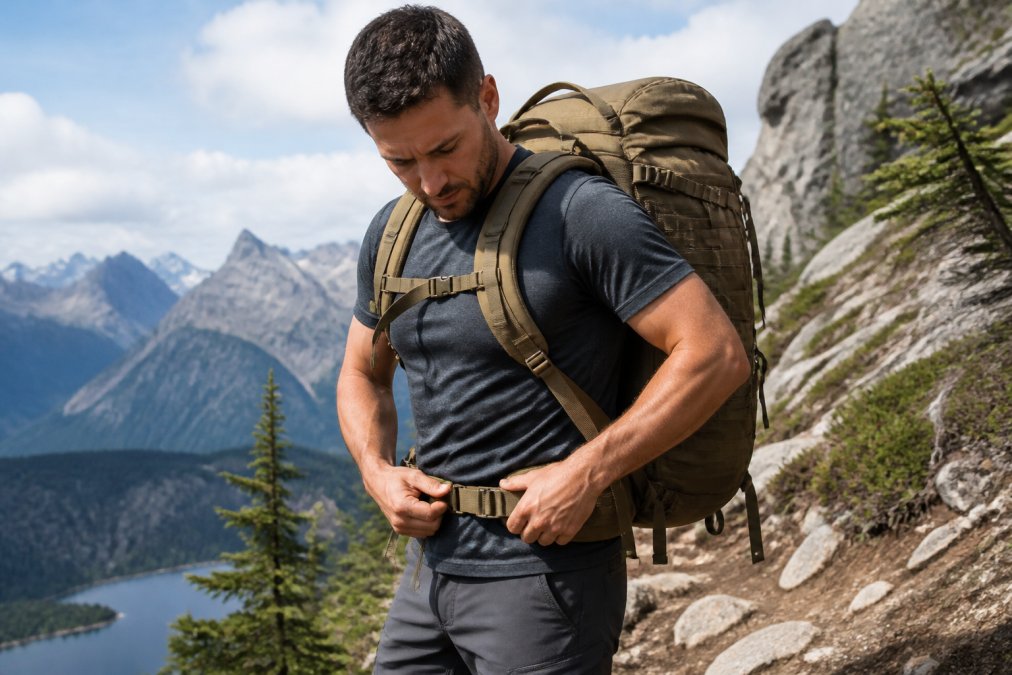
Here’s how to load it:
- Place dense items like water, food, and tools in the center, against your back
- Keep light items like a sleeping bag at the bottom
- Put frequently used gear in top and side pockets
- Tighten the hip belt first, then the shoulder straps, then the load lifters
Adjusting Straps and Load Position
Adjust in this order every time: hip belt first, snug against your hip bones; shoulder straps next, just tight enough to keep the pack against your back; load lifters last, angled slightly down to pull weight forward.
A common mistake is cranking the shoulder straps tight and leaving the hip belt loose, that’s what causes shoulder fatigue on a long day. If your pack always hurt, the fix is usually the belt, not a new bag.
Essential Travel Comfort Items You Should Never Skip
Certain items earn their place in every pack because they solve comfort problems you can’t fix once you’re on the move.
Compression socks. Graduated compression applies the most pressure at the ankle and less up the calf, helping calf muscles push blood back toward the heart when you’re sitting still for hours. That’s why they matter most on long flights, train rides, and full days in a car, not on the trail. Look for a graduated pair sized to your calf circumference, not your shoe size, too tight at the top creates a tourniquet effect and worsens swelling.
Noise-canceling headphones. Active noise cancellation samples ambient sound and plays an inverted wave to cancel it, which works best on the low, steady drone of engines and road noise, not voices or sudden sounds. That makes them a sleep and focus tool on travel days, not a substitute for earplugs at a noisy campground. Bring foam earplugs as backup.
An eye mask and a light scarf or wrap. Light exposure is the biggest signal your body uses to decide whether it’s time to sleep, so blocking it is the cheapest sleep aid you can pack. A wrap doubles as a blanket, pillow cover, and layer for over-air-conditioned cabins.
A small comfort and repair kit. Blister care (moleskin or hydrocolloid bandages), pain-relief tablets, a spare strap or zip tie, and a needle-and-thread card.
Clothing Materials That Keep You Comfortable
Material choice matters more than layer count. Breathable fabrics like merino wool and synthetic blends move sweat away from your skin and dry fast. Cotton holds moisture, gets heavy, and chills you when the temperature drops, avoid it against your skin on any trip where you might sweat or get rained on.
If you’re not sure whether a fabric will work, wear it for a full day at home before you pack it. A shirt that feels fine for an hour can be unbearable by hour eight.
How to Pack a Tactical Backpack for Easy Access
Packing a tactical backpack for easy access means organizing by use frequency, not category: gear you reach for constantly goes in outer and top pockets, gear you touch once a day goes deep.
Set up zones:
- Quick-access zone: top lid and hip belt pockets for snacks, map, phone
- Core zone: main compartment center for heavy items
- Bottom zone: sleeping gear and items you won’t need until camp
- External: water bottle, trekking poles, rain shell
When your bag has defined zones, you stop digging.
Packing Cubes and Compression Strategies
Packing cubes turn a loose pile into a system. Use one cube per clothing category, compress soft items to reclaim space, and roll clothes instead of folding to reduce wrinkles and bulk.
Compression strategies that work:
- Roll base layers and socks into tight cylinders
- Use a compression sack for a sleeping bag
- Keep dirty clothes in a separate cube to stop odor spreading
- Pack a foldable tote for laundry or day trips
Over-compressing a load makes the pack stiff and harder to balance. If your bag feels like a brick, you’ve packed too tight and lost the flexibility that keeps weight centered.
How to Pack for Comfort on Long-Haul Flights and Road Trips
Travel days demand a different comfort strategy than trail days: on a long-haul flight or a full day in the car, you’re sitting still for hours, which changes what your body needs.
- Compression socks to keep circulation moving
- A light blanket or large scarf for temperature swings
- Noise-canceling headphones and an eye mask
- A refillable water bottle and easy snacks
- Any medications and travel documents in one pouch
Packing for Specific Physical Needs and Stress Reduction
Comfort isn’t only physical, and it isn’t one-size-fits-all. Two angles most packing guides skip are packing for specific bodies and packing for a calmer mind, both where the real comfort gains live.
Packing for Specific Physical Needs
Start with your body’s history, not a generic list. If you have a bad shoulder, a past injury, chronic pain, or a mobility limitation, the standard advice may not apply to you.
Packing for Psychological Comfort
Mental comfort is a packing category, not an afterthought. The goal is removing decisions and reducing uncertainty, because those are what drain you on a trip.
The most comfortable pack is one you’ve tested with real weight before the trip, built around your body and your mind. Fit and organization reduce both physical strain and the low-grade stress of not knowing where anything is.
Sustainable Packing Choices That Also Improve Comfort
Eco-friendly packing and comfort often point the same direction: durable, well-made gear that lasts for years is gentler on the planet and more comfortable on your back, because quality construction holds its shape and carries load better.
Practical sustainable choices:
- Buy durable luggage and gear you’ll keep, not replace each season
- Choose versatile clothing that works across climates, so you pack less
- Carry a refillable water bottle and reusable toiletry containers
- Use packing cubes and a foldable tote instead of single-use bags
- Repair straps and zippers before replacing a whole pack
Frequently Asked Questions
What are the most essential items to pack for travel comfort?
Start with a supportive backpack with padded straps and a hip belt, moisture-wicking base layers, compression socks, a refillable water bottle, and a small toiletry bag with travel-sized personal care items. Add a lightweight foldable tote for day trips, noise-canceling headphones for long-haul flights, and an emergency kit with blister care and pain relief. These items address physical comfort, organization, and stress reduction without adding unnecessary weight to your load.
How do you pack a backpack for maximum comfort and weight distribution?
Place heavier items like your sleeping bag, stove, and food close to your spine and at hip level. Keep lighter gear such as clothing and a travel pillow at the bottom and top. Use packing cubes to group similar items and prevent shifting. Tighten the hip belt first so it carries 80 percent of the load, then adjust shoulder straps and load lifters. This approach reduces shoulder strain and keeps the pack stable on uneven terrain.
What clothing materials are best for long-term comfort?
Merino wool and synthetic blends like polyester and nylon move moisture away from your skin and dry quickly. Breathable fabrics with mesh panels work well for warm climates, while thermal underwear made from merino or polypropylene adds warmth without bulk in cold conditions. Avoid cotton for extended trips because it holds sweat and dries slowly. A capsule wardrobe of versatile clothing that layers easily keeps you comfortable across changing temperatures.
How can I reduce luggage weight without sacrificing comfort?
Weigh your packed bag before every trip and remove duplicates. Decant toiletries into travel-sized containers, choose versatile footwear that works for multiple activities, and wear your heaviest layers on travel days. Swap bulky towels for quick-dry microfiber versions and use compression sacks for soft items. A lightweight gear strategy keeps essential travel comfort items like compression socks and a neck pillow while cutting redundant clothing and heavy accessories that add pounds without improving your experience.
Comfort on the trail comes down to preparation, fit, and organization, and the right gear makes all three easier. Adventurers Pulse builds durable tactical backpacks and outdoor essentials engineered for comfort and performance, with adjustable weight distribution, organized storage, and construction meant to last trip after trip. Go prepared with gear you can trust in any environment. Shop now with Adventurers Pulse and pack for the adventure ahead.



0 Comments