
Table of Contents
- Tactical vs Hiking Backpacks: What Actually Changes on the Trail
- Top Backcountry Alternatives for Tactical Backpacks in 2026
- Ergonomic Hiking Pack Features That Tactical Packs Often Miss
- Weight-to-Durability Ratio: Where Tactical Packs Lose Ground
- How to Hybridize Your Setup: Keeping MOLLE Without the Bulk
- MOLLE, PALS, and Modular Storage: What Transfers to the Backcountry
- Conclusion
- Frequently Asked Questions
Last Updated: September 23, 2026
Tactical vs Hiking Backpacks: What Actually Changes on the Trail
The core difference between a tactical pack and a hiking pack comes down to design priority: tactical packs optimize for modular gear access under stress, while hiking packs optimize for carrying a heavy load comfortably over many miles. That distinction matters more than most buyers expect. A backcountry alternative for tactical backpacks solves exactly that problem by keeping the utility you want while fixing the ergonomics you don’t.
Frame geometry is where the two designs diverge first. Tactical frames tend to sit flat and rigid against the back, which keeps gear stable but traps heat and limits how the load moves with your body. Hiking frames, by contrast, use curved stays and tensioned mesh to create an air gap and follow your spine’s natural curve. On a five-mile day hike, you may not notice. On a multi-day trip, that gap is the difference between finishing strong and limping into camp.
Frame Geometry and How It Affects Long-Distance Comfort
Ergonomic hiking pack features start with the frame. A well-designed suspension system transfers most of the load to your hips through a padded hip belt, leaving your shoulders free to stabilize rather than carry. Tactical packs often skip this because their original job was short-duration assault use, not all-day load carriage. When you wear a flat tactical frame for hours, the weight stays high and pulls on your shoulders, which is the single most common complaint we hear from customers with old injuries.
Top Backcountry Alternatives for Tactical Backpacks in 2026
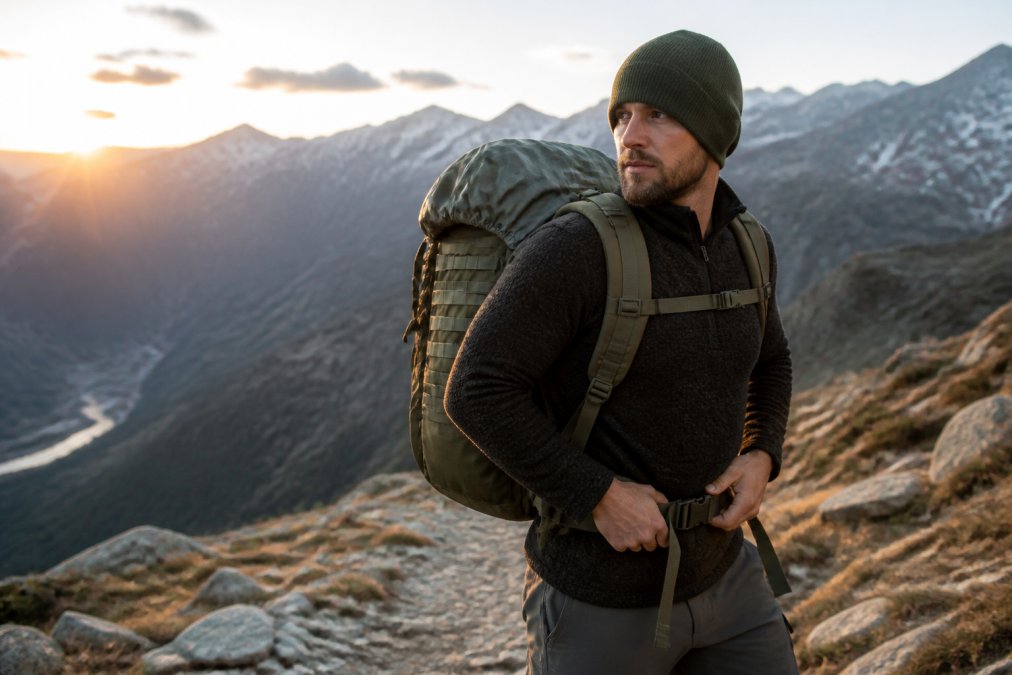
The best backcountry alternative for tactical backpacks balances modular storage with a suspension system built for distance. Below are four packs that make that trade-off well, plus our own pick for shoppers who want both worlds in one bag.
| Pack | Starting Price | Weight | Best For |
|---|---|---|---|
| Adventurers Pulse | See site | Varies by model | All-around durability and comfort |
| Mystery Ranch 2-Day Assault | $229 | Moderate | Hybrid tactical-to-trail use |
| Gregory Focal 58 | $300 | Light | Ultralight backpacking gear |
| 5.11 RUSH12 2.0 | $110 | Compact | Budget day hikes and EDC |
Mystery Ranch 2-Day Assault: The Hybrid That Bridges Both Worlds
Mystery Ranch built this pack around its signature 3-ZIP design, which lets you open the main compartment wide without unpacking everything. It includes MOLLE webbing for modular pouches and an adjustable yoke for a custom fit. The catch is the weight: it carries heavier than dedicated trail models. For someone transitioning from a pure assault pack, though, it’s a sensible first step.
Gregory Focal 58: When Ultralight Backpacking Gear Wins
If comfort over distance is your priority, the Gregory Focal 58 is the strongest pure-hiking option here. Its FreeFloat ventilated suspension keeps air moving across your back, the lightweight alloy frame stabilizes the load, and an integrated rain cover handles sudden weather. What it lacks is MOLLE. There are no PALS webbing panels, so the modular storage tactical users rely on simply isn’t there.

5.11 RUSH12 2.0: Budget-Friendly Tactical Organization for Day Hikes
For day hikes and everyday carry, the 5.11 RUSH12 2.0 delivers impressive organization at a low price. The 1050D nylon shell resists abrasion, the front admin panel keeps small tools sorted, and there’s a CCW-compatible compartment plus external MOLLE. Where it falls short is long-distance comfort. The suspension is basic, so it works for a few hours but not for a full backpacking day.
For pure trail comfort, choose a hiking-first pack. For modular utility on shorter trips, a hybrid like the Mystery Ranch 2-Day Assault or our own line keeps MOLLE without the worst of the bulk.
Ergonomic Hiking Pack Features That Tactical Packs Often Miss
Most articles on this topic stop at a feature checklist. The more useful question is what happens to your body over 20, 50, or 100 miles when a pack was designed for a two-hour assault window instead of a five-day traverse. Three mechanical differences drive nearly every long-distance complaint.
Load transfer to the hips. A hiking pack’s hip belt is a structural member, not a strap. On a properly fitted pack, roughly 60 to 80 percent of the load rides on the iliac crest of the pelvis, and the shoulder straps do little more than keep the bag against your back. Tactical packs typically route load through a rigid frame sheet that sits high and flat, so the shoulders and upper trapezius carry the majority of the weight.
Frame compliance and spinal flexion. A tactical frame is intentionally stiff to keep gear stable during movement and to support body armor or a plate carrier. That stiffness is a liability on uneven ground, where your spine wants to flex and rotate with each step. A hiking frame uses curved aluminum or composite stays that follow the thoracic curve and allow a controlled amount of torsional flex. The result is that the pack moves with you rather than against you on talus, root beds, and sidehill traverses.
Ventilation and heat retention. Flat frame sheets sit directly against the back and trap sweat.
If you have a prior shoulder, neck, or lower-back injury, the frame geometry matters more than the fabric. A pack that carries 40 pounds on your hips feels dramatically different from one that carries the same load on your shoulders, even if the two bags weigh the same empty.
A common pattern is that hikers transitioning from tactical gear notice the difference most on day three of a multi-day trip, when accumulated fatigue exposes the ergonomic shortcuts. If you plan to keep a tactical-style pack, prioritize models with an adjustable yoke, a load-bearing hip belt, and at least some frame compliance.
Weight-to-Durability Ratio: Where Tactical Packs Lose Ground
Weigh your empty pack on a kitchen scale before you buy accessories. Knowing the baseline makes it easy to see when pouches, straps, and hardware are quietly pushing you past your target carry weight.
For backcountry trekking, ounces compound over miles. A pack that saves a pound empty lets you carry a pound of water, food, or a hydration bladder instead. The goal is not the lightest pack or the toughest pack, but the pack whose durability matches the terrain you actually hike.
How to Hybridize Your Setup: Keeping MOLLE Without the Bulk
You can keep modular storage without carrying a full assault pack. Start with a hiking-first pack that has a hip belt and ventilated suspension, then add modularity through accessories rather than the bag itself.
- Choose a pack with at least a few external attachment points or daisy chains
- Add a small MOLLE-compatible pouch for quick-access tools
- Use compression straps to secure bulky items and reduce pack sway
- Swap heavy metal buckles for quick-release buckles where you can
- Move dense items close to your spine for better load distribution
- Test the full setup on a short overnight before a long trip
MOLLE, PALS, and Modular Storage: What Transfers to the Backcountry
MOLLE is a modular attachment system that uses horizontal webbing rows to mount pouches and gear. PALS webbing is the specific grid of straps that MOLLE pouches thread through. Both transfer cleanly to backcountry use, and that’s the strongest argument for a tactical-style pack on the trail. The organization is genuinely better for specialized gear. What doesn’t transfer well is the assumption that more attachment points equal a better pack.
Weigh each pouch before you mount it. A handful of small pouches can quietly add a pound, which is exactly the weight you were trying to save by switching packs.
Conclusion
The real challenge is that most packs force a choice: tactical organization or trail comfort, rarely both. Adventurers Pulse empowers passionate outdoor enthusiasts with high-performance, exceptionally durable gear, ensuring you can explore mountain trails, forest campsites, and off-grid adventures with unwavering confidence. Our curated selection of tactical backpacks, survival tools, and essential outdoor equipment is engineered for comfort and reliability, allowing you to go prepared with gear you can trust in any environment.
Frequently Asked Questions
Why are tactical backpacks often considered heavy for backcountry hiking?
Most tactical packs use 1000D Cordura or 1050D nylon for abrasion resistance, which adds significant weight compared to ripstop nylon used in hiking packs. Add a frame sheet, PALS webbing, and compression straps, and you are carrying 3-5 lbs more than a comparably sized hiking pack before loading any gear. Over 10 miles, that extra weight compounds fatigue and affects load distribution.
What features should I look for in a backcountry pack if I like tactical organization?
Prioritize a suspension system with a padded hip belt and sternum strap, a ventilated frame sheet, and modular pouch attachment points like MOLLE or PALS webbing. Look for compartmentalization that matches your gear: a hydration bladder sleeve, quick-release buckles, and compression straps. The Mystery Ranch 2-Day Assault offers tri-zip access and MOLLE without the weight of a full military pack. Aim for under 4 lbs empty if you plan multi-day trips.
Can I use a military-style pack for thru-hiking?
You can, but most military-style packs are not designed for the repetitive motion and long-mileage demands of thru-hiking. Tactical frames tend to sit closer to the back, reducing ventilation and causing sweat buildup. The ergonomic hiking pack features that matter most, like a free-float suspension or adjustable yoke, are often missing. If you thru-hike with a tactical pack, expect to modify it with aftermarket hip belts and possibly a different frame sheet.
What are the best lightweight alternatives to heavy tactical gear?
The Gregory Focal 58 weighs under 3 lbs and includes a FreeFloat ventilated suspension, making it a strong ultralight backpacking gear option for long-distance trekking. If you want to keep some modularity, the Mystery Ranch 2-Day Assault provides MOLLE webbing and a tri-zip design at a lighter weight than full tactical packs. For day hikes, the 5.11 RUSH12 2.0 offers CCW compatibility and admin organization at a lower weight and price point.





0 Comments