
Table of Contents
- Build Your Kit Around Systems, Not Just Gear Lists
- Off-Grid Power Solutions for Camping
- Water Filtration and Storage
- Shelter, Sleeping Systems, and Thermal Regulation
- Best Survival Tools for Off-Grid Camping
- Off-Grid Camping Gear Checklist
- Maintenance, Repair, and Seasonal Adjustments
- Frequently Asked Questions
Last Updated: September 20, 2026
Build Your Kit Around Systems, Not Just Gear Lists
Choosing gear for off-grid trips works best when you build systems, not shopping lists. We’ve watched hikers assemble a pile of gadgets that don’t talk to each other when the weather turns. A system is a set of components sharing a job: power, water, shelter, repair, and safety. When one part fails, the others compensate.
The Five Core Systems of Self-Sufficiency
Every capable off-grid kit rests on five pillars:
- Power, generation, storage, and distribution
- Water, collection, purification, and containment
- Shelter and thermal regulation, protection plus insulation
- Tools and repair, the ability to fix what breaks
- Navigation and communication, knowing where you are and getting help
The common mistake is over-investing in one pillar while neglecting the rest. A hiker with a top-tier sleeping bag and no water treatment is still in trouble.
Off-Grid Power Solutions for Camping
Off-grid power solutions for camping come in two formats. A solar power bank is a small battery with foldable panels, enough for a phone, headlamp, or GPS. A portable power station is a larger battery with AC outlets, capable of running a laptop, small cooler, or CPAP machine.
- Solar power bank: best for ultralight trips of one to three nights where you only need to top off small electronics
- Portable power station: best for base camps, vehicle-supported trips, and anyone running medical or cooking devices
- Hybrid approach: carry a small bank and leave a larger station in the vehicle
Solar Power Banks vs. Portable Power Stations
| Feature | Solar Power Bank | Portable Power Station |
|---|---|---|
| Typical use | Phone, headlamp, GPS | Laptop, cooler, medical devices |
| Weight | Light, pocketable | Heavy, vehicle or base camp |
| Recharge speed | Slow in shade | Fast from wall or vehicle |
| Best for | Ultralight and backpacking | Base camps and overlanding |
Test your power setup on an overcast weekend before a real trip. If your panel can’t recover your battery in poor light, you’ve found the weak link in the system.
Water Filtration and Storage
Water purification is the most important system in any off-grid kit, because dehydration ends trips faster than cold or hunger. The reliable approach is redundancy: one primary filter plus a backup that doesn’t share the same failure point.
Common setups include:
- Squeeze filters for backpacking, lightweight and fast
- Gravity systems for base camps and groups
- UV purifiers as a backup against viruses
- Chemical tablets as a last-resort redundancy
Never rely on a single filter for a multi-day trip. Filters clog, freeze, and crack. If your only purification method fails on day two, your options shrink to boiling, which costs fuel.
Shelter, Sleeping Systems, and Thermal Regulation
Shelter and insulation are where casual campers and serious off-grid travelers diverge. A three-season tent rated for summer weekends won’t hold up to unexpected mountain weather. Look for a bathtub floor, taped seams, and a rainfly that vents without leaking.
- Shelter: freestanding tent, tarp, or hammock depending on terrain
- Sleeping bag: rated below the coldest temperature you expect
- Pad: R-value matched to season, higher for snow
- Base layers: merino or synthetic, never cotton
Best Survival Tools for Off-Grid Camping
Best survival tools for off-grid camping are the ones you’ve practiced with, not the ones with the most features. A multi-tool, fixed-blade knife, fire starter, and repair kit cover nearly every field problem. But the real differentiator is whether you can repair what breaks, a topic most gear guides skip.
The Core Tool Set and What Each One Actually Does
- Multi-tool: handles loose screws on trekking poles, cuts cordage, strips wire, and adjusts stove valves. Look for one with a locking blade and a real pair of pliers, not a decorative saw.
- Fixed-blade knife: stronger than a folder for batoning small kindling and food prep. A 4- to 5-inch blade with a full tang is the practical sweet spot; anything longer is dead weight on a backpacking trip.
- Ferrocerium rod: throws sparks at roughly 3,000°F and works when lighters fail in cold or wet conditions. Pair it with a dedicated striker rather than the spine of your knife, which dulls the edge.
- Repair kit: the most under-built item in most packs. Duct tape, cordage, a needle, a patch kit for your sleeping pad, and a spare buckle or two.
Field Repair: The Skill Nobody Teaches
Most guides tell you what to bring, not how to fix it miles from a trailhead. A few repairs worth practicing at home:
- Tent repair: a torn rainfly or seam can be patched with a peel-and-stick nylon patch or a needle and dental floss (stronger than most thread and won’t rot). For a snapped pole, a pole splint, a short length of aluminum tubing, slides over the break and holds the pole rigid.
- Sleeping pad repair: pinhole leaks are the most common pad failure. Find them by inflating the pad, submerging sections in water, and watching for bubbles. Patch with the adhesive patch that ships with most pads, or a dab of seam grip.
- Filter repair: a clogged hollow-fiber filter can often be backflushed in the field. A cracked housing cannot, this is why redundancy matters more than any single filter’s specs.
- Cordage and buckle repair: a broken pack buckle can be replaced with a spare side-release buckle and a length of webbing. Carry one spare buckle; it weighs almost nothing and saves a trip.
Build a dedicated repair pouch and never raid it for tape or cordage on a normal trip. A repair kit you’ve cannibalized is a repair kit you don’t have.
Durability and Testing
Durability is the deciding factor; cheap tools strip, bend, and rust. Test every tool at home before trusting it in the backcountry: strike the ferro rod, cut with the knife, open every multi-tool implement. A tool that fails in your driveway would have failed on the mountain.
Navigation and Communication
Navigation and communication is the system most people under-build. A GPS or phone with offline maps is your primary, but batteries die and screens crack. A paper topographic map and baseplate compass are the backup that never runs out.
- Primary: GPS or offline phone maps
- Backup: paper map and compass, practiced
- Emergency: satellite communicator with SOS
Test your navigation skills on a familiar trail with the map only. If you can’t navigate without the screen, you can’t navigate when the screen dies.
Off-Grid Camping Gear Checklist
An off-grid camping gear checklist should be organized by system, not by category, so you can verify each pillar before you leave. Print it, laminate it, and run through it every single trip. The U.S. Forest Service safety guidance recommends leaving a trip plan with someone at home, which pairs naturally with a system-based checklist.
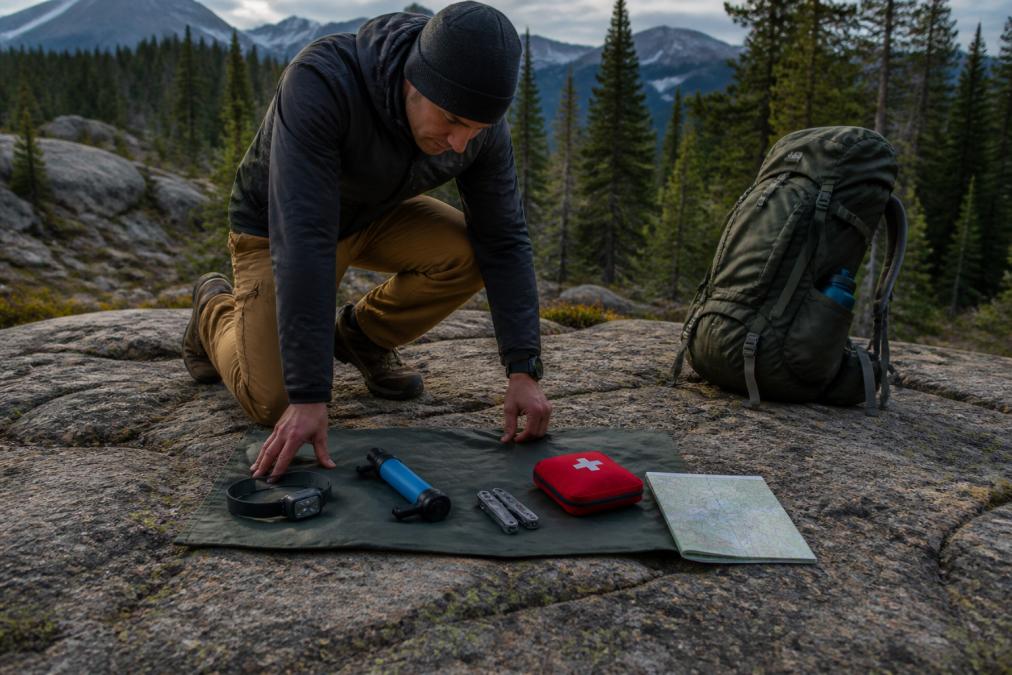
- Power: charged bank, panel, cables, spare batteries
- Water: primary filter, backup purifier, storage reservoir
- Shelter: tent, stakes, rainfly, sleeping bag, pad
- Tools: multi-tool, knife, fire starter, repair kit
- Navigation: GPS, paper map, compass, satellite communicator
- Safety: first aid kit, headlamp, emergency blanket, whistle
What Most People Forget
The items people forget are rarely exciting: spare headlamp batteries, the repair kit, waste management supplies, and psychological preparation for isolation. That last one is the gap most guides never mention, long solo trips wear on you in ways gear can’t fix. Practice short solo overnights before committing to a week alone.
Maintenance, Repair, and Seasonal Adjustments
Gear maintenance keeps every other system alive. Before each trip, inspect seams, test zippers, check filter flow rate, and verify battery health. After each trip, clean and dry everything before storage: a filter stored wet grows mold, a tent stored damp mildews, and a lithium battery stored at full charge in high heat degrades faster than one stored at roughly half charge.
Seasonal Gear Adjustments: The Gap Most Guides Skip
Few articles differentiate a high-altitude summer trip from a winter off-grid outing, but the kit changes more than most people expect. Treat the season as a variable that reshapes every system:
- Summer (high altitude): drop heavy insulation, but carry more water capacity, altitude and dry air increase fluid loss. A 20°F bag is often overkill; a 30°F to 35°F bag plus a good pad is lighter and adequate. Sun protection becomes a system of its own: wide-brim hat, UV-blocking layers, and lip balm with SPF.
- Winter: add a higher R-value pad (R-5 or above for snow), a four-season shelter, and fuel that performs in cold. Canister fuel loses pressure below freezing; a liquid-fuel stove or a canister kept warm inside your jacket is the workaround. Water bottles freeze overnight, sleep with them or use an insulated sleeve.
- Shoulder season: the hardest kit to build, because you’re carrying for warm days and freezing nights in the same trip. Layering systems and a bag rated for the coldest expected night, not the average, are the fix.
Field Repair Is a Skill, Not a Purchase
Learn to patch a tent, splice cordage, and repair a sleeping pad. A REI expert advice on gear repair library is a reasonable place to start building those skills. The thing nobody tells you about off-grid trips is that the person who can fix their gear is the person who stays out longer.
Psychological Preparation for Isolation
This is the gap almost no gear guide covers, and it’s the one that ends trips. The quiet, monotony, and absence of a decision-making partner compound over days. Most practitioners find the mental load peaks around day three to five of a solo trip, not day one.
Practical preparation:
- Practice short solo overnights before committing to a week alone. One night in a familiar spot teaches you more about your own tolerance than any article can.
- Build a routine, fixed times for meals, camp chores, and navigation checks give structure to unstructured days.
- Bring a morale item, a book, a journal, or a downloaded playlist. It sounds trivial until you’ve spent a rainy day alone in a tent.
- Know your exit plan. Knowing you can leave reduces the anxiety that makes you want to.
Waste Management: The Quiet Failure
Sanitation is a major pain point for off-grid campers, largely ignored in favor of cool gadgets. Pack out everything, including human waste where required, using a wag bag system. In many backcountry areas, proper waste disposal isn’t a suggestion, it’s a legal requirement, and rangers do check. Plan your waste system before you leave, not when you’re already out there.
A filter stored wet grows mold, and a tent stored damp mildews. Dry everything completely before storage, a single damp weekend can ruin a season’s worth of gear.
Frequently Asked Questions
What gear is essential for long-term off-grid survival?
Focus on five systems: power, water, shelter, food, and tools. For power, a portable power station paired with a folding solar panel keeps devices charged. For water, a gravity filter plus backup purification tablets covers most sources. Shelter means a weatherproof tent and a sleeping bag rated below your lowest expected temperature. Tools include a multi-tool, fire starter, first aid kit, and satellite communicator. When choosing gear for off-grid trips, redundancy matters more than any single item.
What are common off-grid mistakes to avoid?
The biggest mistake is buying gear without testing it at home first. Set up your tent in the yard, run your water filter, and charge your power bank before you leave. Other frequent errors include ignoring weatherproofing, overpacking, skipping navigation backups, and forgetting waste management supplies. A satellite communicator or GPS plus a paper map covers navigation when batteries fail. Test everything before your off-grid trips so surprises happen close to home, not miles from the trailhead.
How do I pack for a completely off-grid adventure?
Start with load distribution: heavy items like your portable power station go close to your spine and mid-back, while light gear fills the top and bottom. Keep your water purification system and first aid kit in easy-to-reach pockets. Use stuff sacks to separate categories, and pack your rain layer last so it stays accessible. Aim for a base weight you can carry comfortably for hours. A well-organized pack reduces fatigue and makes camp setup faster when daylight is short.
What is the most forgotten item when camping?
Repair supplies top the list: duct tape, a sewing kit, spare buckles, and patch material for sleeping pads and tents. People also forget waste management bags, extra batteries for headlamps, and a backup fire starter. On longer off-grid trips, a small field repair kit keeps a torn shelter or broken strap from ending your adventure. Pack these items in a dedicated pouch so they never get left behind during your off-grid camping gear checklist review.
What is the 200 rule for camping?
The 200 rule is a simple safety guideline: never camp within 200 feet of a water source, trail, or established campsite. This distance protects riparian areas from contamination and gives you space from other campers. It aligns with Leave No Trace principles, which ask visitors to disperse campsites and pack out all waste. Following the 200 rule keeps backcountry areas healthy and reduces conflicts, especially during peak season when remote camping spots fill quickly.
How should I adjust my off-grid gear for different seasons?
Summer trips call for lighter insulation, more hydration capacity, and sun protection. Shoulder seasons demand a warmer sleeping bag, a four-season tent, and waterproof layers. Winter requires a high R-value sleeping pad, a stove rated for cold fuel, and extra power capacity because solar panels produce less in short daylight. Swap out gear rather than adding layers of everything. Seasonal adjustments keep your pack weight reasonable while matching the conditions you will actually face.




0 Comments