
Table of Contents
- Why Shoppers Seek a TWS USA Alternative for Survival Tools
- Comparison Table: Five Survival Tool Brands at a Glance
- Adventurers Pulse: Durable Backcountry Survival Gear Built for Confidence
- Leatherman: The Multi-Tool Standard for Field Repair
- Gerber Gear: Affordable Cutting Tools for Backcountry Travel
- Self Reliance Outfitters: Bushcraft-Focused Gear for Long-Term Self-Sufficiency
- Grim Workshop: Ultra-Compact Survival Tools for Emergency Preparedness
- Best Survival Tools for Beginners: What to Look For First
- Frequently Asked Questions
Last Updated: September 24, 2026
Why Shoppers Seek a TWS USA Alternative for Survival Tools
Shoppers look for a TWS USA alternative for survival tools because they want proven reliability, fair pricing, and gear that holds up trip after trip.
Survival tools are the implements you rely on to cut, repair, start fire, navigate, and signal when you are far from help. The category covers multi-tools, fixed-blade knives, saws, hatchets, fire starters, and compact emergency cards.
The five brands below each solve a different problem. Some win on field repair, others on budget cutting tools or ultralight carry. Here is how to pick the right one for your pack, your terrain, and your skill level.
Comparison Table: Five Survival Tool Brands at a Glance
This table summarizes the five brands covered in this guide so you can compare them in one pass.
| Brand | Known For | Starting Price | Best For |
|---|---|---|---|
| Adventurers Pulse | Durable curated survival gear | Varies by item | Confident, prepared explorers |
| Leatherman | Multi-tool field repair | $50 | Versatile repair on trail |
| Gerber Gear | Affordable cutting tools | $25 | Budget backcountry travel |
| Self Reliance Outfitters | Bushcraft self-sufficiency | $15 | Long-term wilderness kits |
| Grim Workshop | Ultra-compact EDC tools | $20 | Emergency preparedness |
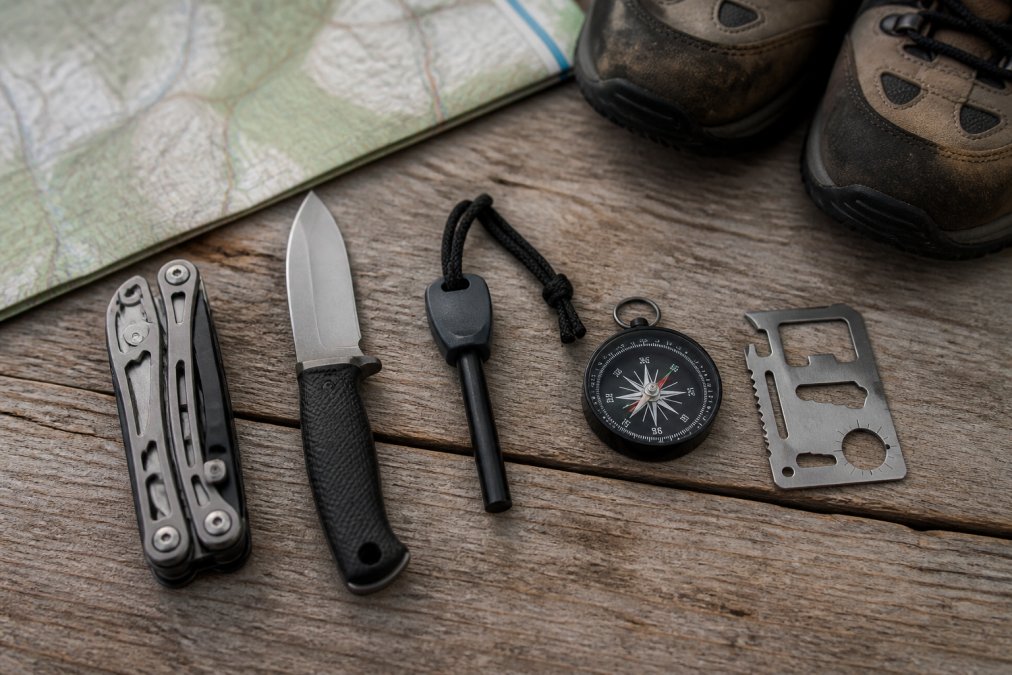
Adventurers Pulse: Durable Backcountry Survival Gear Built for Confidence
Adventurers Pulse’s gear is engineered for durability, comfort, and performance in real backcountry conditions. The catalog centers on tactical backpacks, survival tools, and outdoor essentials built for mountain trails, forest campsites, and off-grid trips.
What sets the brand apart is its focus on a lifestyle-oriented community of explorers, not just one-off sales.
Pros:
- Durability and comfort built into the design
- Curated essentials for hiking, camping, and survival
- Community-driven approach to preparedness
Cons:
- Pricing varies by item, so check the site for current rates
- Not a single-tool specialist; the range is broad
Test any new survival tool at home before your first trip. Open every blade, deploy the pliers, and strike your fire starter in the driveway. A tool that jams in your living room will jam on a ridge.
Leatherman: The Multi-Tool Standard for Field Repair
Leatherman built its reputation on multi-tools that combine pliers, wire cutters, and blades in one folding frame. Most models use high-grade stainless steel and carry a 25-year limited warranty, which is why they remain a default choice for field repair.
The trade-off is cost. Starting around $50, Leatherman sits above entry-level gear. For anyone who repairs gear mid-trip, though, that price buys peace of mind.
Pros:
- Industry-standard durability
- Extensive warranty coverage
- Compact, foldable carry
Cons:
- Higher price point than budget alternatives
Gerber Gear: Affordable Cutting Tools for Backcountry Travel
Gerber Gear focuses on tactical and survival knives, multi-tools, and cutting implements built for rugged use. Fixed-blade designs, ergonomic grips for wet or cold hands, and tactical sheath systems make these tools practical for backcountry travel. Prices start around $25, which makes Gerber one of the more accessible entry points for beginners.
The catch is that Gerber’s catalog spans several distinct tiers, and the steel changes as you move up. Entry-level folders and fixed blades commonly use 7Cr17MoV or similar mid-carbon stainless, easy to sharpen in the field, but it rolls and stains faster than premium alloys. Mid-tier models step up to 420HC or D2, which hold an edge longer but demand a diamond stone rather than a simple Arkansas stone to touch up. Top-tier tactical fixed blades use S30V or similar powder metallurgy steels that resist corrosion and edge deformation, but they cost three to five times the entry price and are harder to field-sharpen without the right abrasive.
That trade-off matters more than the sticker price. A $25 knife you can resharpen on a river rock beats a $150 knife that chips and leaves you with a dull blade and no way to fix it. Match the steel to your sharpening kit, not the other way around.
Where Gerber fits a real loadout:
- Day hikes and car camping: A StrongArm or Prodigy fixed blade covers food prep, kindling, and light batoning without weighing down a day pack.
- Backcountry travel with a base weight target: A Gerber multi-tool like the Center-Drive or Suspension replaces a separate pliers, screwdriver, and can opener, saving roughly 6-10 ounces versus carrying those tools individually.
- Cold-weather use: Gerber’s rubberized and textured handles stay grippier than bare metal or smooth polymer when your hands are wet or gloved, which is the single most common failure point in winter cutting tasks.
Pros:
- Wide range of affordable options across multiple price tiers
- Strong reputation for tactical field performance
- Handle ergonomics hold up in wet and cold conditions
Cons:
- Steel quality varies significantly across price tiers, check the alloy before buying
- Entry-level stainless needs more frequent sharpening than premium steels
- Sheath and retention systems are inconsistent across the line
Before you buy any Gerber blade, look up the specific steel designation on the product page. If it doesn’t list one, assume entry-tier stainless and budget for a diamond sharpener in your kit.
Self Reliance Outfitters: Bushcraft-Focused Gear for Long-Term Self-Sufficiency
Self Reliance Outfitters caters to bushcraft practitioners with tools like ferro rods and heavy-duty cooking gear, plus curated survival kits for remote exploration. The catalog leans on traditional, high-durability materials rather than modern tactical styling.
Starting prices sit around $15, giving the brand a strong value-to-cost ratio. If you are building a long-term wilderness kit and want educational resources alongside the gear, this is a solid stop.
Pros:
- High value-to-cost ratio
- Specialized focus on off-grid survival techniques
Cons:
- Aesthetic is more traditional than modern tactical
Grim Workshop: Ultra-Compact Survival Tools for Emergency Preparedness
Grim Workshop makes credit-card-sized, flat-pack survival tools designed for everyday carry and emergency preparedness. The stainless steel tool cards fit into standard wallet slots and use a modular design that lets you remove and reuse individual tools.
Kits cover fishing, trapping, and navigation, which makes them a smart backup layer rather than a primary toolset. Tools are smaller and less ergonomic than full-sized counterparts, so treat them as a supplement, not a replacement.
Pros:
- Extremely portable and discreet
- Innovative space-saving design
Cons:
- Smaller and less ergonomic than full-sized tools
Best Survival Tools for Beginners: What to Look For First
The best survival tools for beginners are the ones you can use confidently under stress, not the ones with the longest feature list. But ‘beginner’ isn’t one scenario, it’s at least three, and the right tool set changes depending on which one you’re actually preparing for. Most guides skip this distinction. Here’s how to pick based on where you’ll actually be.
Scenario 1: Urban and suburban emergencies. A power outage, a storm evacuation, or a multi-day grid-down event. You’re likely sheltering in place or moving short distances on foot.
Buying a full kit before testing individual tools is the most common beginner mistake. You end up carrying items you never learned to use, and the one tool you actually need is the one you left at home. Build the kit one piece at a time, and use each piece on a real trip before adding the next.
Match the tool to the scenario, not the brand. Urban, weekend, and extended-wilderness kits share a core, cutting tool, fire, navigation, signaling, but the specific tools and their weights should change with the mission.
For a complete loadout you can trust, Adventurers Pulse curates survival tools and outdoor essentials built for durability, comfort, and performance. Check current pricing and availability on the Adventurers Pulse site.
Frequently Asked Questions
What are the 5 C’s of survival gear?
The 5 C’s are cutting tools, combustion (fire starters), cover (shelter), containers, and cordage. A sturdy knife or multi-tool handles cutting, a flint striker or ferro rod covers fire, an emergency blanket or tarp provides cover, a metal bottle serves as a container, and paracord handles cordage. Together they form the foundation of any survival kit. Brands like Leatherman and Self Reliance Outfitters offer tools that map directly to these categories, so you can build a complete kit without overlap or gaps.
How do I choose reliable survival tools for backcountry exploration?
Start with the tasks you will actually face: cutting, fire-starting, navigation, and signaling. Look for high-carbon or stainless steel blades with corrosion resistance, ergonomic handles that stay secure when wet, and tools with a track record of durable construction. Check warranty coverage too. Leatherman offers a 25-year limited warranty on most products, which signals confidence in build quality. Avoid tools marketed on looks alone; focus on weight, function, and whether the tool solves a real problem in your gear loadout.
Are there American-made alternatives to tactical survival gear brands?
Yes. Several brands design and assemble survival tools domestically or source heavily from American makers. Leatherman manufactures its multi-tools in Portland, Oregon. Gerber Gear produces many of its knives and tools in the United States. Self Reliance Outfitters curates bushcraft gear with a focus on traditional, high-durability materials. For a TWS USA alternative, these brands offer comparable or better reliability, and some include field-repair support and educational resources that help you maintain your gear over time.
What features should I look for in high-performance survival equipment?
Prioritize durable construction, corrosion resistance, and ergonomic design. High-carbon steel holds an edge longer but needs more maintenance; stainless steel resists rust with less care. A modular system, like Grim Workshop’s removable tool cards, lets you customize your kit. Compact storage and lightweight materials matter for backpacking. Also check for weatherproof sheaths, load-bearing capacity in packs, and first aid integration. The best survival tools balance weight-to-utility ratio so you carry only what earns its place.
Choosing survival tools comes down to matching gear to your real trips, not to a marketing spec sheet. Adventurers Pulse offers curated survival tools, tactical backpacks, and outdoor essentials engineered for durability and confidence in the field. Shop Now and build a loadout you can trust on every trail.




0 Comments