
Table of Contents
- Quick Comparison: Best Multi-Day Hiking Gear for 2026
- Backpacking Packs: Carrying Systems That Distribute Load
- Sleeping Systems: Quilts That Cut Base Weight
- Essential Backcountry Survival Tools for Remote Trips
- How to Pack for a 3-Day Hike Without Overloading
- Ultralight Backpacking Gear List: What to Carry and What to Cut
- Budget-to-Performance Ratios: Where Your Money Actually Goes
- Repair and Maintenance: Making Multi-Day Hiking Gear Last
- Frequently Asked Questions
Last Updated: September 13, 2026
Quick Comparison: Best Multi-Day Hiking Gear for 2026
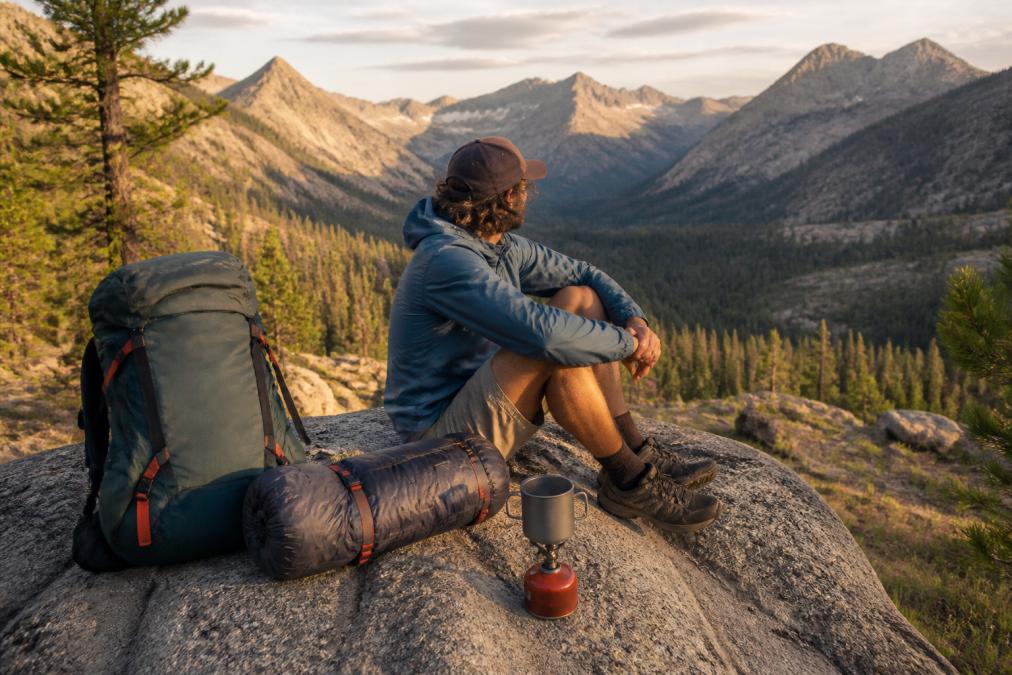
The best multi-day hiking gear in 2026 comes down to three decisions: how you carry weight, how you sleep, and how little you can get away with. Here are the packs, quilts, and survival tools that earn their place on a three-day route.
If you want the short version before the detail:
| Gear Category | Top Pick | Why It Wins | Starting Price |
|---|---|---|---|
| Backpack | Osprey Atmos AG 65 | Ventilated suspension for heavy loads | $360 |
| Ultralight Pack | Hyperlite Unbound 40 | Dyneema construction, 27.3 oz | $395 |
| Sleeping Quilt | Hyperlite 20-Degree Quilt | Three-season reliability | $450 |
| Budget Quilt | Enlightened Equipment Revelation | Customizable warmth | $300 |
| Stove | Jetboil Flash | Boils in ~100 seconds | $130 |
Backpacking Packs: Carrying Systems That Distribute Load
A multi-day pack lives or dies by its suspension, not its volume. The best multi-day hiking gear for 2026 treats load distribution as the primary design problem: a pack that transfers weight to your hips keeps your shoulders fresh on day three.
Osprey Atmos AG 65: Maximum Ventilation for Heavy Loads
The Atmos AG 65 is a pack that excels when shoulder discomfort is a concern on long treks. Its Anti-Gravity suspension spreads weight across your whole back rather than two pressure points, and the fit-on-the-fly hipbelt adjusts tension mid-climb without stopping. It’s heavier than ultralight alternatives, but for heavy loads on humid routes, that trade is worth it.
Granite Gear Blaze 60: Best Weight-to-Performance Ratio
Weighing roughly 3 lbs, the Blaze 60 hits a weight-to-performance ratio that’s hard to beat at its price. The removable lid converts into a chest pack, handy when you’re navigating a scramble and want your map and snacks within reach. Where it falls short: ventilation, since the back panel runs warmer than a suspended mesh design.
Sleeping Systems: Quilts That Cut Base Weight
Quilts have quietly replaced mummy bags for weight-conscious hikers: a quilt eliminates the insulation crushed beneath you that does nothing, cutting base weight without sacrificing warmth. Pair one with a high-R-value pad and you’ve solved your sleep system.
Enlightened Equipment Revelation Quilt: Customizable Warmth
The Revelation lets you choose down fill power, temperature rating, and footbox configuration. The adjustable footbox opens flat for warm nights and cinches closed when temperatures drop, and the pad attachment system keeps drafts off your back. The catch: a quilt only works as well as the pad beneath it, so budget for a quality pad.
Hyperlite 20-Degree Quilt: Three-Season Reliability
For variable conditions, the Hyperlite 20-Degree Quilt is the safer pick. Its water-resistant down treatment matters more than most people realize, because condensation inside a tent is the quiet enemy of down insulation. The 20-degree rating covers most three-season trips, and the shell fabric resists abrasion inside a pack.
It costs more. That premium buys durability and peace of mind when the forecast turns.
Essential Backcountry Survival Tools for Remote Trips
Essential backcountry survival tools are the items you hope never to use but never leave behind. For multi-day routes, that means four systems working together: cooking, navigation, water treatment, and emergency signaling.
Cooking Systems: Speed vs. Simplicity
The Jetboil Flash boils water in roughly 100 seconds, which matters when you’re melting snow or racing fading daylight (jetboil.com). Its push-button igniter and color-changing heat indicator remove the guesswork, for rehydrating meals on a cold evening, speed wins. For two people or actual simmer control, an integrated canister stove like the MSR WindBurner or a remote-canister setup like the Soto Amicus with a titanium pot gives more flexibility. A canister stove plus a 750ml titanium pot runs about 8-10 oz; an integrated system runs 12-16 oz but boils faster and handles wind better. Fuel math matters more than most people plan for: a standard 100g canister typically yields 8-12 boils, and for a three-day trip with two hot meals a day, one 230g canister is usually sufficient for one person. Cold temperatures reduce canister pressure, sleep with the canister in your quilt on freezing nights.
Navigation: Redundancy Is the Rule
A phone is not a navigation system. Cold drains batteries fast, and there’s no signal in most remote valleys. The 2026 standard is a dedicated GPS unit or a satellite communicator as your primary, with a paper map and baseplate compass as your no-battery backup.
- Satellite communicators (Garmin inReach Mini 2, Somewear Global Hotspot) send two-way texts and SOS via satellite networks. The inReach Mini 2 weighs about 3.5 oz and pairs with your phone for mapping. Subscription plans start around $15/month for the basic tier.
- Dedicated GPS units (Garmin GPSMAP 67, GPSMAP 67i) run on AA batteries or internal rechargeables and hold up in rain and cold. The 67i adds inReach satellite messaging.
- Phone apps (Gaia GPS, CalTopo, AllTrails) are excellent for planning and as a secondary display, but treat them as a backup, not a primary. Download maps offline before you leave.
A baseplate compass and a paper map of your route cost under $40 combined and weigh almost nothing.
Water Treatment: Filter, Purify, or Both
Water treatment is the most commonly underestimated survival tool. Giardia and Cryptosporidium are real risks in most backcountry water sources, and a filter alone doesn’t kill viruses (the CDC).
- Squeeze filters (Sawyer Squeeze, Katadyn BeFree) handle bacteria and protozoa, weigh 2-3 oz, and cost $25-$45. They’re the default for most three-season trips.
- Gravity systems (Platypus GravityWorks, Sawyer Gravity) filter 2-4 liters at once and are ideal for camp, where you’re filtering for multiple people or multiple meals.
- UV purifiers (SteriPen) kill viruses and bacteria but require clear water and batteries. They’re a good backup, not a primary.
- Chemical treatment (Aquamira drops, chlorine dioxide tablets) is the lightest backup and works when filters freeze or clog. Tablets need 30 minutes to 4 hours depending on temperature.
For most multi-day routes, carry a squeeze filter as your primary and chemical tablets as a backup. If you’re traveling internationally or in areas with viral risk, add a UV purifier or rely on chemical treatment.
Emergency Signaling: The Layer You Hope Never to Use
A satellite communicator is the single most important safety item for remote trips. The Garmin inReach Mini 2 and the Somewear Global Hotspot both offer two-way messaging and SOS activation. A personal locator beacon (PLB) like the ACR ResQLink is a simpler, subscription-free option that sends a one-way distress signal to rescue coordination centers (noaa.gov).
The trade-off: PLBs are lighter and have no subscription, but you can’t send or receive messages. Satellite communicators cost more upfront and require a plan, but they let you communicate with family and coordinate with rescuers.
Relying on a phone for navigation in the backcountry can be a common mistake. Cold drains batteries fast, and there’s often no signal in most remote valleys. Carry a separate GPS unit or a paper map and compass as your primary, and treat the phone as a backup.
How to Pack for a 3-Day Hike Without Overloading
How to pack for a 3-day hike comes down to one rule: heaviest items close to your spine and centered between your shoulder blades. That keeps the load stable and lets your hips do the work.
Pack in this order:
- Sleeping quilt and clothes at the bottom, in a stuff sack or pack liner.
- Heaviest items (food, stove, fuel) in the middle, against your back.
- Rain gear and layers near the top for quick access.
- Navigation, snacks, and water in hipbelt pockets and the lid.
- Wet gear and shelter in the external mesh pocket.
A common mistake is overpacking food. Three days of meals plus a buffer is enough for most routes. Weigh your pack before you leave. If it’s over a comfortable threshold, you’re carrying something you won’t use.
Ultralight Backpacking Gear List: What to Carry and What to Cut
An ultralight backpacking gear list starts with the big three: pack, shelter, and sleep system. Get those under control and everything else is detail. The goal isn’t minimalism for its own sake, it’s carrying only what earns its weight.
The Big Three: Where Your Base Weight Lives
Your base weight (everything except food, water, and fuel) is dominated by three items. For a three-season ultralight setup, here’s the realistic range:
- Pack: 2-3 lbs for a framed ultralight pack (Hyperlite Unbound 40, Gossamer Gear Mariposa 60), or 1-1.5 lbs for a frameless pack if your total load stays under 25 lbs.
- Shelter: 1.5-2.5 lbs for a trekking-pole-supported tent (Durston X-Mid 2, Zpacks Duplex) or a tarp and bug bivy. Freestanding tents run 3-5 lbs.
- Sleep system: 2-3 lbs for a 20-degree quilt plus a high-R-value pad. A quilt saves 8-12 oz over a comparable mummy bag because it eliminates insulation crushed beneath you.
A realistic three-season ultralight base weight lands between 10 and 15 lbs.
Shelter: The Biggest Weight Decision
Shelter is where ultralight hikers save the most weight, and where they make the biggest mistakes. A trekking-pole-supported tent like the Durston X-Mid 2 weighs about 2 lbs and handles wind well when staked properly. A tarp and bug bivy combo can drop to 1 lb but requires more skill to pitch and offers less storm protection. Single-wall tents save weight but condense more inside; double-wall tents add 8-12 oz but keep condensation off your quilt. For most three-season trips in variable conditions, a double-wall trekking-pole tent is the safer choice.
Sleep System: Quilt Plus Pad
A 20-degree quilt (Enlightened Equipment Revelation, Hyperlite 20-Degree Quilt) paired with a pad rated R-4 or higher covers most three-season conditions. The pad matters as much as the quilt, a quilt only works as well as the insulation beneath it. An inflatable pad with an R-value of 4-5 weighs 14-20 oz; closed-cell foam weighs 10-14 oz but is bulkier and less comfortable.
What to Carry
- Three-season shelter with a footprint or polycryo ground sheet
- Sleeping quilt and insulated pad (R-4 or higher)
- Titanium cookware and a canister stove
- Water filtration (squeeze filter) and a hydration bladder or bottles
- Trekking poles for load transfer and shelter support
- Headlamp (rechargeable or AAA), first aid, and a repair kit
- Satellite communicator for remote routes
What to Cut
- Redundant layers and a second stove
- Cotton clothing, which holds moisture and dries slowly
- Heavy camp shoes you’ll barely wear, trail runners or lightweight sandals work
- Extra fuel beyond your calculated need (one 230g canister per person for three days)
- Stuff sacks for every item, use one pack liner instead
- A separate pillow, stuff your quilt or puffy in a stuff sack
The Value Angle: Budget-to-Performance in the Big Three
Ultralight gear gets expensive fast, but the value question isn’t “what’s cheapest”, it’s “what will still work on trip twenty.” A $200 framed pack from a mid-tier brand often delivers 80% of the performance of a $400 ultralight pack at half the cost, with a small weight penalty. The same logic applies to quilts: a $200-$250 mid-tier 20-degree quilt keeps you warm but may lose loft faster than a $400+ premium quilt. Where to spend: your sleep system and your shelter. Where to save: cookware, stuff sacks, and accessories.
Buy your pack last. Once you know the volume of your quilt, shelter, and food, you can size the pack correctly. Buying the pack first is how people end up with 65 liters of empty space and a heavier carry than necessary.
Budget-to-Performance Ratios: Where Your Money Actually Goes
Budget-to-performance ratios matter more than brand names here. The money in a pack goes to three places: suspension, fabric denier, and hardware. A ventilated suspension costs more to build but pays off in comfort on long days; higher denier and ripstop fabrics resist abrasion but add grams. Where you should spend: your pack and your sleep system. Where you can save: cookware, stuff sacks, and accessories. For a casual weekend camper, mid-tier gear often delivers most of the performance at a fraction of the cost.
Buy your pack last. Once you know the volume of your quilt, shelter, and food, you can size the pack correctly. Buying the pack first is how people end up with 65 liters of empty space and a heavier carry than necessary.
Repair and Maintenance: Making Multi-Day Hiking Gear Last
Repair and maintenance separates gear that lasts a season from gear that lasts a decade. Most gear failures are preventable with a few habits.
- Rinse and dry your quilt after every trip. Body oils degrade down over time.
- Check seam seals on your shelter before each season and reapply as needed.
- Inspect your pack’s straps and buckles for fraying, and replace worn hardware early.
- Store quilts loosely, never compressed, to preserve loft.
- Carry a field repair kit with patch material, cord, and a spare buckle.
A five-minute inspection at home prevents the mid-trip failure that ruins a route. This is the least glamorous part of multi-day hiking gear, and the one that saves the most money.
If you’d rather not think about any of this, Adventurers Pulse curates packs, survival tools, and sleep systems built for durability and comfort, so you can head out prepared with gear you trust. Shop the collection and spend your planning time on the route instead.
Frequently Asked Questions
What gear do you need for multi-day hiking?
A multi-day setup covers five core systems: a pack sized to your trip length, a shelter, a sleep system (quilt or bag plus pad), a stove and cookware, and water treatment. Add navigation, a headlamp, layers, and a first-aid kit. For three days, most hikers carry a 50-65 liter pack. Base weight, meaning everything except food and water, typically lands between 12 and 20 pounds depending on how much you spend on ultralight materials.
How much should my multi-day hiking pack weigh?
Aim for a base weight under 20 pounds for a three-season trip. Packs themselves range widely: the Hyperlite Mountain Gear Unbound 40 weighs 27.3 ounces, while the Osprey Atmos AG 65 runs heavier because of its suspended mesh frame. The trade-off is comfort versus load capacity. If your total pack weight stays under 30 pounds, a lighter frameless or semi-framed pack works. Above that, an ergonomic suspension system pays for its extra ounces.
What are the most important survival tools for multi-day treks?
Essential backcountry survival tools start with navigation you can trust when your phone dies, such as a paper map and compass or a dedicated GPS device. Add a satellite communicator or emergency beacon, a repair kit with tape and cord, a fire source, and a water filter. A headlamp with spare batteries and an emergency shelter round out the list. Test each tool at home before you rely on it in the field.
How do I choose the right backpack for multi-day hiking?
Match the pack to your load, not the trip length alone. Weigh everything you plan to carry, then pick a suspension system rated for that load. Packs with suspended mesh, like the Osprey Atmos AG 65, handle 35 pounds or more with ventilation. Ultralight options such as the Gossamer Gear Gorilla 50 suit loads under 30 pounds. Always measure your torso length and adjust the hipbelt so weight sits on your hips, not your shoulders.
What are the best lightweight gear options for 2026?
Sleeping quilts have replaced mummy bags for many hikers. The Zpacks Summer Quilt and Enlightened Equipment Revelation Quilt cut significant weight while keeping insulation value high. For shelter, Dyneema Composite Fabric packs like the Hyperlite Unbound 40 resist water without a raincover. The Jetboil Flash boils water in about 100 seconds, saving fuel on longer trips. Each swap trades money for ounces, so prioritize the heaviest items first.
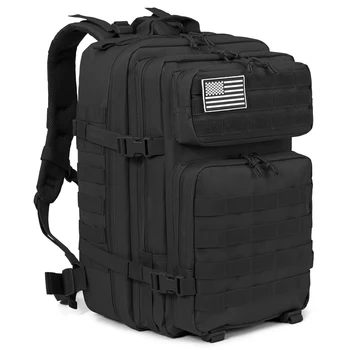
Multi-day trips punish gear that looks the part but can’t handle day three. The fix is choosing equipment for load distribution, insulation value, and repairability rather than marketing claims. Adventurers Pulse builds and curates performance-driven equipment for exactly that kind of trip, from tactical backpacks to essential survival tools, backed by a community of explorers who actually use it. Get started with Adventurers Pulse and head into the backcountry with gear engineered to last.




0 Comments