
Table of Contents
- How to Evaluate High Performance Gear for Hiking
- Footwear: Boots vs. Trail Runners for Every Terrain
- Backpack Selection: Lightweight Backpacking Essentials
- Technical Hiking Clothing Benefits: Layering That Works
- Navigation, Safety, and Emergency Preparedness Gear
- Hiking Gear Maintenance Tips to Extend Lifespan
- Best High Performance Gear for Hiking: Quick Comparison
- Which Hiking Gear Setup Is Right for You?
Last Updated: August 25, 2026
Choosing the wrong gear costs you the summit. At Adventurers Pulse, we’ve spent years field-testing high performance gear for hiking across every terrain. The difference between gear that holds up and gear that fails comes down to a handful of decisions most buyers get wrong the first time.
Quick Picks:
- Best Overall Backpack: Osprey Atmos AG 65, unmatched load distribution for multi-day trips
- Best Budget Pack: REI Co-op Flash 55, excellent value for weekend adventurers
- Best Footwear for Cushioning: Hoka Speedgoat 5, superior grip and all-day comfort
- Best Shell Jacket: Arc’teryx Beta LT, lightweight GORE-TEX protection that doesn’t quit
- Best Safety Device: Garmin inReach Mini 2, two-way satellite messaging when cell service is gone
How to Evaluate High Performance Gear for Hiking
High performance gear is equipment engineered to maintain function under sustained physical stress, variable weather, and rough terrain. The best gear balances weight, durability, and protection without forcing you to sacrifice one for another.
Weight-to-Performance Ratio: What Actually Matters
The weight-to-performance ratio is the single most useful lens for evaluating any piece of trail gear. It asks: how much capability does this item deliver per ounce? A heavier boot that provides ankle stability on technical terrain earns its weight. A heavy boot on a well-maintained day trail does not.
Most people overweight durability and underweight packability when new to hiking. The instinct to buy the thickest, heaviest option "just in case" leads to fatigue, slower miles, and higher injury risk. Ultralight gear has matured significantly; ripstop fabrics, synthetic insulation, and articulated fit designs now deliver durability that once required much heavier construction. Weigh every item in your kit, then ask whether each one is pulling its weight for your specific trip.
Budget-Friendly vs. Pro-Grade: Where to Spend More
Not every category justifies pro-grade spending:
| Gear Category | Spend More | Save Here |
|---|---|---|
| Footwear | Yes, fit and traction prevent injury | Gaiters (budget options work fine) |
| Shell Jacket | Yes, waterproofing fails at low-end | Base layers (mid-range performs well) |
| Backpack | Yes, suspension affects your spine | Trekking poles (mid-range is sufficient) |
| Water Filtration | Yes, reliability is non-negotiable | Stuff sacks and dry bags |
| Satellite Communicator | Yes, your life may depend on it | Hiking pants (fit matters more than brand) |
Spend on anything that touches your feet, your back, or your safety.
Footwear: Boots vs. Trail Runners for Every Terrain
The boots vs. trail runners debate depends entirely on terrain type, load, and ankle history. Trail running shoes like the Hoka Speedgoat 5 dominate well-maintained trails and thru-hiking, where their cushioning and lower weight reduce fatigue. Traditional hiking boots remain the right call for technical terrain, off-trail scrambling, or carrying heavy loads where ankle support prevents injury.
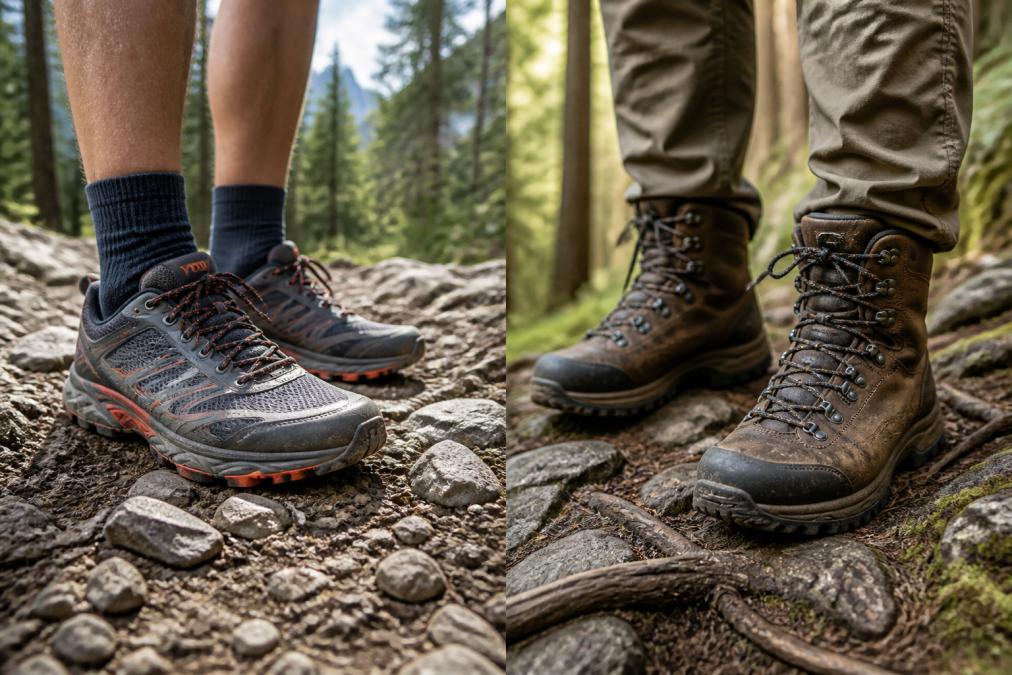
The Hoka Speedgoat 5 ($155) is the trail runner benchmark. Its Vibram Megagrip outsole handles loose soil and wet rock with confidence, and the lighter CMEVA midsole delivers cushioning without weight penalty. The Merrell Moab 3 Mid Waterproof ($175) represents the best entry point in traditional hiking boots, offering comfort out of the box with genuine waterproof protection for moderate terrain and day hikes.
Proper fit, moisture-wicking sock layers, and breaking in footwear before a major trip eliminate most blister issues. According to American Orthopaedic Foot & Ankle Society guidance on footwear, proper footwear fit is one of the most significant factors in preventing trail-related foot injuries.
Backpack Selection: Lightweight Backpacking Essentials
A backpack is your most personal piece of gear. Getting the fit wrong means pain and fatigue. The best lightweight backpacking essentials start with a pack sized correctly for trip duration and fitted to your torso length, not your height.
The Osprey Atmos AG 65 ($370) is the gold standard for multi-day trips with heavier loads. Its Anti-Gravity suspension system creates a mesh back panel that keeps airflow moving between the pack and your spine. For weekend adventurers or budget-conscious hikers, the REI Co-op Flash 55 ($229) delivers genuine performance without premium pricing, with a roll-top closure and Packmod attachment system that adapts to different gear configurations.
Load Distribution and Fit for Injury Prevention
Load distribution is the mechanical reason why a well-fitted pack protects your back. The goal is to transfer roughly 80% of the pack’s weight onto your hips, leaving your shoulders to stabilize rather than carry. This requires the hip belt to sit centered on your iliac crest, not your waist.
A common mistake is buying a pack based on volume without checking torso length sizing. Most quality packs come in multiple torso sizes; using the wrong one shifts load distribution entirely onto your shoulders, causing the shoulder and neck pain that follows people home from trips.
If you have a prior shoulder injury, prioritize packs with a wider, more contoured hip belt and a load lifter strap that you can tighten to pull the pack’s top away from your shoulders.
Technical Hiking Clothing Benefits: Layering That Works
Technical hiking clothing is apparel engineered for sustained physical output in variable conditions: moisture-wicking base layers, insulating mid-layers, and weather-resistant shell jackets that work as a system. The performance gap between purpose-built hiking clothing and standard athletic wear is real and measurable on a cold, wet ridge.
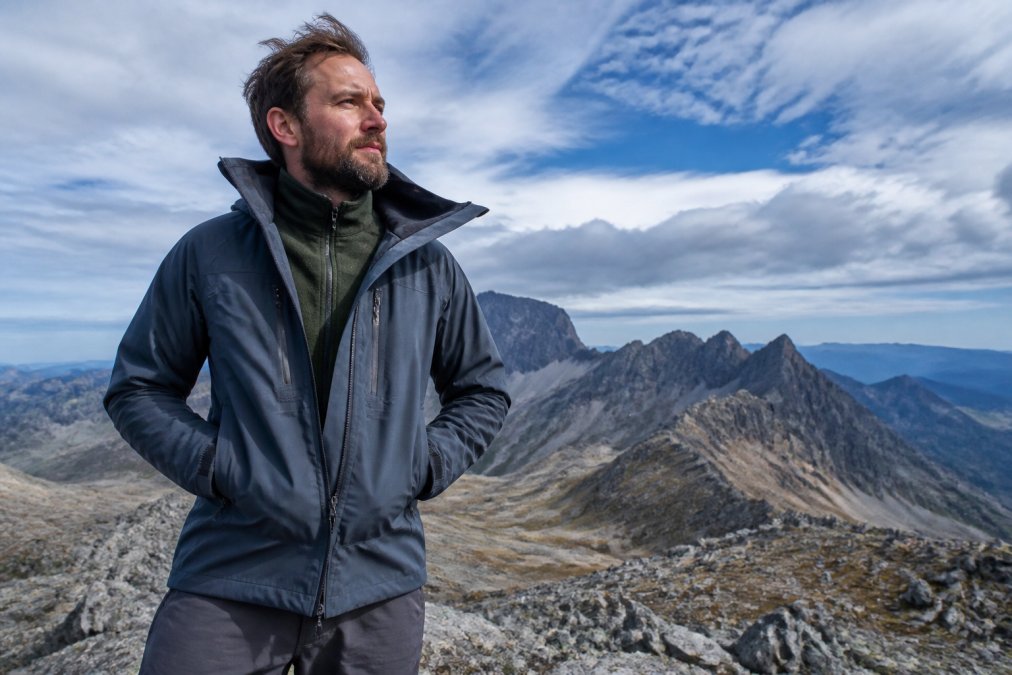
Base Layer, Mid-Layer, and Shell Jacket Explained
Base layer pulls sweat away from skin to keep you dry and regulate temperature. Merino wool and synthetic fabrics both work well; merino offers natural odor resistance for multi-day trips, while synthetic dries faster. Cotton fails completely in this role.
Mid-layer provides insulation. Fleece and synthetic insulation work well for active hiking; down fill loses insulating properties when wet. For high-output activities where you’re generating body heat, a lightweight fleece mid-layer you can remove and stow is more practical than heavy down.
Shell jacket is your weather armor. The Arc’teryx Beta LT ($450) sets the benchmark. Its 3-layer GORE-TEX construction delivers genuine waterproof, windproof, breathable protection with a helmet-compatible StormHood, underarm zippers for heat dumping, and articulated patterning. This jacket will outlast multiple budget alternatives.
As noted by Leave No Trace Center for Outdoor Ethics, dressing appropriately for conditions is a core element of outdoor preparedness and trail safety.
Never rely on a single waterproof layer without a moisture-wicking base underneath. Waterproof shells trap humidity from your body; without a proper base layer pulling sweat away, you’ll be wet from the inside out.
Navigation, Safety, and Emergency Preparedness Gear
Emergency preparedness gear is the category most hikers underinvest in until they need it. Navigation tools, satellite communicators, and headlamps matter when conditions deteriorate or a trip goes sideways.
Satellite Communication and GPS Navigation
The Garmin inReach Mini 2 ($399.99 device + subscription starting at $14.95/month) operates on the Iridium satellite network, enabling two-way messaging anywhere on Earth. The interactive SOS connects directly to a 24/7 search and rescue monitoring center, and TracBack routing helps you navigate back to your trailhead if you lose your way. For occasional hikers, the annual Freedom plan allows activation only for the months you need it, reducing ongoing cost.
GPS navigation on a phone is useful for trailhead planning. It is not a substitute for satellite communication when you’re 15 miles from the nearest road.
Headlamp Lumens and Hydration Systems
The Black Diamond Spot 400-R ($70) delivers 400 lumens of max output with an IP67 waterproof rating, enough to handle driving rain. The rechargeable 1500 mAh Li-ion battery eliminates mid-trip scrambles for AAA batteries, and the red night-vision mode preserves your eyes’ dark adaptation around camp.
For hydration systems, the Sawyer Squeeze Water Filter ($46) is the most versatile lightweight option. It removes 99.99999% of bacteria and 99.9999% of protozoa, attaches to standard water bottles or hydration bladder tubing, and backflushes for cleaning in the field. According to Centers for Disease Control and Prevention guidance on backcountry water treatment, untreated water from natural sources can carry harmful pathogens that cause serious illness.
Hiking Gear Maintenance Tips to Extend Lifespan
Well-maintained gear lasts years longer than neglected gear. A quality shell jacket or backpack represents a real investment; the difference between gear that lasts one season and gear that lasts a decade is almost entirely maintenance.
Sustainability and Gear Repair on the Trail
Shell jackets lose their durable water repellency (DWR) coating over time, causing the outer fabric to "wet out" and feel heavy in rain. Restoring DWR with a wash-in or spray-on treatment extends jacket life significantly. Wash shells with technical fabric cleaner; standard detergents degrade DWR faster.
Backpacks benefit from regular inspection of stress points: hip belt attachment, shoulder strap stitching, and frame sheet connections. Small tears in ripstop fabric can be repaired with ripstop tape in the field.
Trail footwear should be cleaned after muddy trips and allowed to dry naturally away from direct heat. Heat degrades the adhesives that bond outsoles, the most common failure point in otherwise sound trail shoes. A small repair kit, ripstop tape, tenacious tape, needle and thread, and spare buckles, weighs almost nothing and has saved more than a few trips from early endings.
The most sustainable gear decision is buying quality once and maintaining it properly, rather than replacing budget gear every season. Repair before replace is both economical and environmentally responsible.
Best High Performance Gear for Hiking: Quick Comparison
| Gear Item | Price | Best For | Key Feature | Weight Class |
|---|---|---|---|---|
| Osprey Atmos AG 65 | $370 | Multi-day heavy loads | Anti-Gravity suspension | Standard |
| REI Co-op Flash 55 | $229 | Budget weekend trips | Packmod versatility | Lightweight |
| Hoka Speedgoat 5 | $155 | Trail running and long hikes | Vibram Megagrip traction | Ultralight |
| Merrell Moab 3 Mid WP | $175 | Day hikes, moderate terrain | Out-of-box comfort | Standard |
| Arc’teryx Beta LT | $450 | Alpine and mixed weather | 3-layer GORE-TEX | Ultralight |
| Black Diamond Spot 400-R | $70 | All-conditions lighting | IP67, 400 lumens | Ultralight |
| Sawyer Squeeze Filter | $46 | Backcountry water treatment | Field-backflushable | Ultralight |
| Garmin inReach Mini 2 | $399.99 + sub | Off-grid safety | Iridium satellite SOS | Ultralight |
Which Hiking Gear Setup Is Right for You?
The right setup depends on trip duration, terrain difficulty, and how much you’re willing to carry.
Day hikers on maintained trails need a comfortable trail runner like the Hoka Speedgoat 5, a 20-30 liter daypack, a moisture-wicking base layer, a packable shell, a headlamp, and a water filter. You don’t need a satellite communicator for well-marked trails with cell coverage, but you should carry one heading somewhere remote.
Weekend backpackers should invest in a quality 50-65 liter pack with proper suspension, a lightweight shelter, and a complete layering system. The Osprey Atmos AG 65 or REI Flash 55 are the two most defensible choices depending on budget.
Remote and multi-day adventurers need the full kit: satellite communication is non-negotiable, water filtration is essential, and shelter weight matters.
The best gear setup is the one you’ve actually tested before relying on it. New boots on a five-day trip, an unfamiliar water filter system at a remote source, or a headlamp you’ve never operated in the dark create real problems. Test everything at home or on a short local hike before committing it to a serious adventure.
Quality gear doesn’t require you to be an extreme athlete to benefit from it. A well-fitted pack with proper load distribution protects your back on a three-mile trail just as it does on a thirty-mile one. Reliable waterproofing matters in a sudden afternoon storm whether you’re a mile from the trailhead or ten. The real question isn’t whether performance gear is worth it for your trips. It’s whether you want to spend your time outdoors managing equipment problems or actually enjoying where you are.
Selecting high performance gear for hiking means making decisions that hold up when conditions don’t cooperate. Adventurers Pulse offers a curated selection of tactical backpacks, survival tools, and essential outdoor equipment engineered for durability, comfort, and performance across every environment, from weekend trail walks to remote backcountry expeditions. Every piece in our lineup is chosen because it earns its place in a serious kit. Shop Now at Adventurers Pulse and head into your next adventure with gear you can trust.
=== FAQ ANSWERS (audit these too, same rules) ===
[1] Q: What defines high performance hiking equipment?
A: High performance hiking gear combines low weight with durability, weather resistance, and ergonomic design. Key markers include ripstop fabric construction, articulated fit for unrestricted movement, moisture-wicking and breathable materials, and proven traction systems. The best gear holds up across multiple seasons without sacrificing comfort. Rather than chasing the lightest option on paper, look for a strong weight-to-performance ratio, gear that earns its place on the trail through trail-tested reliability.
[2] Q: What is the ‘Big 4’ in hiking gear?
A: The Big 4 refers to the four heaviest items most hikers carry: shelter (tent), sleep system (sleeping bag and pad), backpack, and footwear. Upgrading these four items has the greatest impact on overall pack weight and comfort. Ultralight versions of each exist at various price points. Prioritizing quality in the Big 4 before spending on smaller accessories is the most efficient way to build a high performance hiking setup.
[3] Q: What is the 20% rule for backpacking?
A: The 20% rule states that your loaded pack should weigh no more than 20% of your body weight. For a 160-pound hiker, that means a maximum pack weight of 32 pounds. Exceeding this threshold increases joint stress, accelerates fatigue, and raises injury risk on longer routes. Choosing lightweight backpacking essentials, from ultralight tents to compact water filters, is the most practical way to stay within this guideline without sacrificing preparedness.
[4] Q: How should I maintain my high-performance hiking gear?
A: Consistent care extends gear life significantly. Wash moisture-wicking base layers and shell jackets according to label instructions, technical fabrics often require non-detergent cleaners to preserve water-resistance and breathability. Reapply DWR (durable water repellent) treatment to shell jackets when water stops beading. Clean and backflush water filters after each trip. Inspect boot outsoles and midsoles for wear, and store all gear dry to prevent mold and delamination.
[5] Q: How do I choose durable gear for long-distance hiking?
A: Focus on construction quality over brand recognition. Look for ripstop nylon or Dyneema fabrics in packs and tents, Vibram outsoles in footwear, and GORE-TEX or equivalent membranes in shell jackets. Check seam construction, taped seams outperform stitched-only seams in wet conditions. Read user reviews that specifically mention multi-season use. For backpacks, a well-engineered suspension system with proper load distribution matters more than any single feature for long-distance comfort and durability.
Frequently Asked Questions
Q: What defines high performance hiking equipment?
A: High performance hiking gear combines low weight with durability, weather resistance, and ergonomic design. Key markers include ripstop fabric construction, articulated fit for unrestricted movement, moisture-wicking and breathable materials, and proven traction systems. The best gear holds up across multiple seasons without sacrificing comfort. Rather than chasing the lightest option on paper, look for a strong weight-to-performance ratio, gear that earns its place on the trail through trail-tested reliability.
Q: What is the 'Big 4' in hiking gear?
A: The Big 4 refers to the four heaviest items most hikers carry: shelter (tent), sleep system (sleeping bag and pad), backpack, and footwear. Upgrading these four items has the greatest impact on overall pack weight and comfort. Ultralight versions of each exist at various price points. Prioritizing quality in the Big 4 before spending on smaller accessories is the most efficient way to build a high performance hiking setup.
Q: What is the 20% rule for backpacking?
A: The 20% rule states that your loaded pack should weigh no more than 20% of your body weight. For a 160-pound hiker, that means a maximum pack weight of 32 pounds. Exceeding this threshold increases joint stress, accelerates fatigue, and raises injury risk on longer routes. Choosing lightweight backpacking essentials, from ultralight tents to compact water filters, is the most practical way to stay within this guideline without sacrificing preparedness.
Q: How should I maintain my high-performance hiking gear?
A: Consistent care extends gear life significantly. Wash moisture-wicking base layers and shell jackets according to label instructions, technical fabrics often require non-detergent cleaners to preserve water-resistance and breathability. Reapply DWR (durable water repellent) treatment to shell jackets when water stops beading. Clean and backflush water filters after each trip. Inspect boot outsoles and midsoles for wear, and store all gear dry to prevent mold and delamination.
Q: How do I choose durable gear for long-distance hiking?
A: Focus on construction quality over brand recognition. Look for ripstop nylon or Dyneema fabrics in packs and tents, Vibram outsoles in footwear, and GORE-TEX or equivalent membranes in shell jackets. Check seam construction, taped seams outperform stitched-only seams in wet conditions. Read user reviews that specifically mention multi-season use. For backpacks, a well-engineered suspension system with proper load distribution matters more than any single feature for long-distance comfort and durability.
This article was written using GrandRanker






0 Comments