
Table of Contents
- Tactical Gear Durability at a Glance
- Tactical Gear Material Guide: Fabrics That Survive the Field
- Construction Details That Decide Longevity
- What Is MOLLE Webbing and Why It Affects Durability
- How to Maintain Tactical Equipment for Long-Term Wear
- How to Evaluate Tactical Gear Durability Before You Buy
- Frequently Asked Questions
Last Updated: September 18, 2026
Tactical Gear Durability at a Glance
Durability in tactical gear comes down to three things: the fabric’s denier and fiber type, how the seams and stress points are constructed, and how the coating or laminate handles weather. Get those right and a pack or pouch can survive years of hard field use. Get them wrong and it fails at the zipper or the shoulder strap within a season. This guide breaks down what actually makes tactical gear durable, separating gear that lasts from gear that looks the part.
What makes tactical gear durable is the combination of high-denier synthetic fabric, reinforced stitching at load-bearing points, and a finish that resists water and abrasion without trapping moisture. Each element matters on its own, but the real test is how they work together under weight and weather.
Textile durability and abrasion testing standards from ASTM International
Tactical Gear Material Guide: Fabrics That Survive the Field
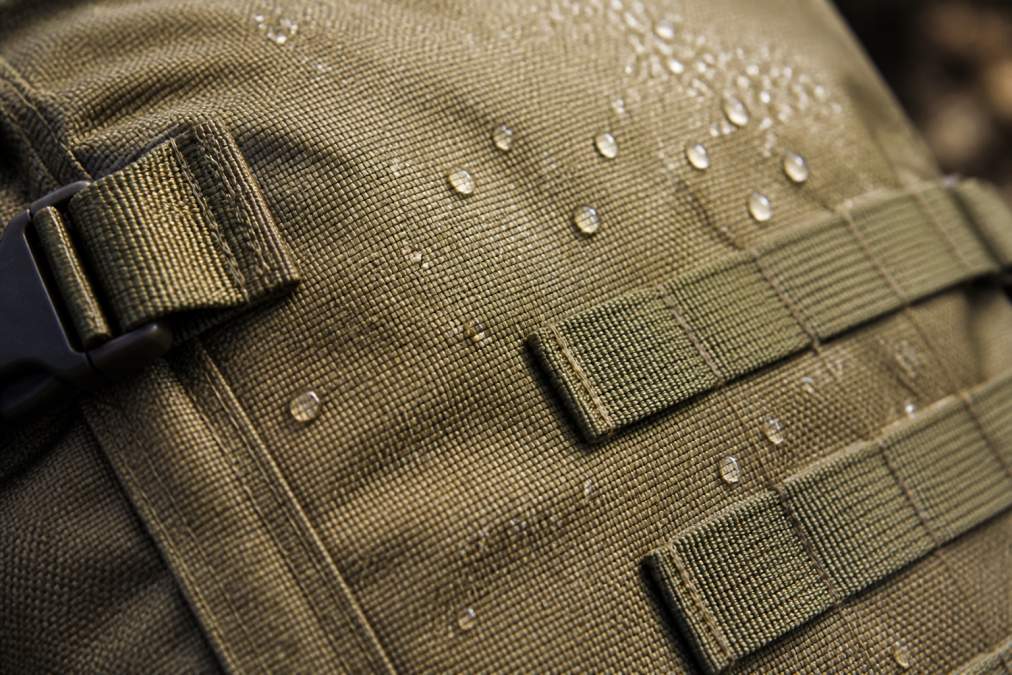
The fabric is the foundation. Most tactical gear relies on nylon or polyester woven to a specific denier, and that number tells you more about longevity than any marketing label. But denier alone is not the whole story, fiber chemistry, weave structure, and the finish applied on top all change how a fabric behaves under abrasion, UV, and load.
Denier Ratings and Fiber Choice
Denier is the weight in grams of 9,000 meters of yarn. A 500D yarn weighs 500 grams across that length; a 1000D yarn weighs twice as much, which means a thicker filament and, generally, a tougher weave. The jump from 210D pack cloth to 500D Cordura nylon is the single biggest durability upgrade most buyers can make, abrasion resistance climbs sharply while weight rises modestly. Going from 500D to 1000D roughly doubles fabric weight and stiffness for a smaller marginal gain in abrasion life, which is why 1000D shows up on drag bags and heavy haulers rather than everyday packs.
Fiber chemistry matters as much as the number. Nylon 6,6 (the base of Cordura) has a higher melting point and better abrasion resistance than nylon 6, and both outperform polyester in tear strength. Polyester, however, resists UV degradation better and holds color longer in prolonged sun.
Coatings, Laminates, and Weather Resistance
A durable water repellent (DWR) finish makes water bead and roll off the surface, but DWR is a surface treatment, it wears off with abrasion and needs reapplication. The real waterproofing usually comes from a backside coating or a laminated membrane.
- Polyurethane (PU) coating, flexible, inexpensive, and common on packs and pouches. It adds structure and moderate water resistance but can degrade and flake over years of flexing.
- TPU (thermoplastic polyurethane) coating, tougher and more abrasion-resistant than standard PU, with better cold-weather flex. Common on higher-end tactical bags.
- Laminated membranes, a film bonded to the fabric rather than coated onto it. These deliver the highest waterproof ratings and do not peel the way coatings can, but they are stiffer and pricier.
| Material | Typical Denier | Abrasion Resistance | Best For |
|---|---|---|---|
| 210D ripstop nylon | 210 | Moderate | Lightweight day packs |
| 500D Cordura nylon | 500 | High | Multi-day packs, pouches |
| 1000D nylon | 1000 | Very high | Heavy hauling, drag use |
| Polyester blend | 600 | High | UV-exposed environments |
Textile durability and abrasion testing standards from ASTM International
Denier tells you yarn weight, not total durability. A 500D nylon with a tight weave and a TPU backer will outlast a loosely woven 1000D fabric with no finish, every time.
Construction Details That Decide Longevity
Seams and stitching fail more often than fabric does. A common mistake is judging a pack by its shell while ignoring how the straps attach and how the base is reinforced. To understand durability, you have to know where gear actually breaks, and then look for the construction that prevents it.
Where Tactical Gear Actually Fails
Field repairs and warranty data point to a consistent set of failure points, and almost none of them are the main fabric panel:
- Zipper coils and sliders, the #1 failure. Grit jams the coil, the slider wears, or the tape pulls free of the seam. A #10 coil zipper with a molded slider outlasts a #5 every time under repeated load.
- Buckle and hardware cracks, plastic side-release buckles become brittle in cold and shatter under shock load. Reinforced polymer or metal hardware survives sub-freezing use.
- Strap anchor points, where shoulder straps and hip belts meet the body. If the anchor is surface-sewn rather than box-X stitched through a reinforced panel, it tears out under a heavy load.
- Base and drag points, the bottom of a pack drags on rock and pavement. Unreinforced bases wear through first.
- Stress risers at bar-tacks, a bar-tack placed on a single layer of fabric can actually concentrate stress and start a tear. Good construction places bar-tacks through reinforced or doubled material.
Stitching and Reinforcement That Survive
Double-stitched main seams, bar-tack stitching at stress points, and bound or taped edges all add life. The pattern matters as much as the thread: a box-X stitch at strap anchors distributes load in four directions, while a single row of stitching concentrates it on one line. Look for bar-tacks at the ends of zippers, at MOLLE attachment rows, and at every point where webbing meets the body fabric.
What “Mil-Spec” and Standardized Testing Actually Mean
“Mil-Spec” gets thrown around as a marketing term, but it refers to specific government performance standards, most commonly MIL-STD-810 for environmental testing and MIL-DTL-32439 for tactical load-carrying equipment. These standards define test methods, not just pass/fail labels: abrasion cycles, tear strength, seam slippage, and colorfastness are all measured against repeatable protocols.
When you inspect a pack, turn it inside out and look at the base and strap anchors first. That’s where manufacturers cut corners, and it’s where most failures start. Then check the zipper size, a #10 coil tells you more about real-world life than any fabric claim on the hang tag.
Don’t buy on appearance alone. Two packs can look identical while one uses 500D Cordura with box-X anchors and a #10 zipper, and the other uses an unlabeled lightweight weave with surface-sewn straps and a #5 zipper that wears through in a season.
What Is MOLLE Webbing and Why It Affects Durability
MOLLE webbing is a system of horizontal nylon straps stitched at regular intervals, used to attach pouches and accessories. The rows are secured with bar-tack stitching at each attachment point, which distributes load across the panel instead of pulling on a single thread. That construction is why MOLLE panels resist tearing even when you hang heavy gear from them. On cheaper gear, the webbing is sewn with single stitching and pulls free under weight.
How to Maintain Tactical Equipment for Long-Term Wear
Maintenance extends field life more than most buyers expect. A few habits keep fabric and hardware working for years.
- Brush off dirt and grit before it works into the weave
- Hand wash with mild soap, never a machine
- Air dry away from direct heat and sunlight
- Reapply DWR spray when water stops beading
- Check zippers and buckles for grit after every trip
- Store gear dry and loosely packed, not compressed
How to Evaluate Tactical Gear Durability Before You Buy
Check the denier and fiber type first, then the stitching, then the hardware. If a listing doesn’t state its fabric weight, that’s a signal. Durable gear usually names its material openly. Look for reinforced seams, bar-tack stitching at stress points, and load-bearing straps that are anchored rather than surface-sewn. A pack that articulates at the shoulder and hip will carry weight better and last longer than a rigid one, especially if you have an old injury that makes even distribution matter.
Frequently Asked Questions
What materials are used to make tactical gear durable?
Durable tactical gear typically uses high-denier synthetic fabrics like 500D or 1000D Cordura nylon, ripstop nylon, and sometimes polyester blends. These fabrics resist abrasion and tearing. Reinforcements come from bar-tack stitching at stress points, double or triple stitching along seams, and heavy-duty hardware such as metal zippers and acetal buckles. Coatings like polyurethane or DWR finishes add water resistance. The combination of tough fabric and reinforced construction is what makes tactical gear durable in the field.
What is MOLLE webbing and how does it affect gear durability?
MOLLE (Modular Lightweight Load-carrying Equipment) webbing is a system of horizontal straps sewn at regular intervals onto a base fabric. It lets you attach pouches and accessories securely. From a durability standpoint, MOLLE webbing distributes weight across multiple attachment points rather than concentrating it on one spot. This reduces stress on individual seams and hardware, extending the life of the pack or vest. The webbing itself is usually made from heavy-duty nylon, adding another layer of abrasion resistance.
How do reinforced stress points improve gear longevity?
Stress points are areas that experience the most force, such as shoulder strap attachments, handle junctions, and bottom corners. Manufacturers reinforce these with extra layers of fabric, bar-tack stitching, or rivets. This prevents the fabric from tearing or seams from ripping under load. Without reinforcement, a heavy load can quickly cause failure at these points. When evaluating gear, check for visible bar-tacks, double stitching, and added patches at high-wear zones.
Is tactical gear worth the investment for casual hikers?
For casual hikers, tactical gear can still be worth it if you prioritize durability and load-carrying comfort. Features like MOLLE webbing, reinforced seams, and abrasion-resistant fabrics mean the gear lasts through many seasons, even with occasional rough use. You do not need to be an off-grid survivalist to benefit from a pack that holds up. If you hike a few times a year, a durable tactical backpack may outlast several cheaper alternatives, making it a cost-effective choice over time.
Durability isn’t a single feature you can spot on a spec sheet. It’s the sum of fiber choice, construction, and care, and it’s what separates gear that lasts from gear that disappoints. Adventurers Pulse builds performance-driven equipment for mountain trails, forest campsites, and remote adventures, with reinforced construction, weather-resistant finishes, and comfort-focused load distribution. Shop now and go prepared with gear you can trust.





0 Comments