
Table of Contents
- Why Buying Reliable Survival Gear Online Matters
- Best Survival Tools for Beginners: Where to Start
- Essential Survival Gear Checklist for Any Adventure
- How to Build a Bug Out Bag That Actually Works
- Top Online Retailers for Survival Gear
- How to Verify Quality Before You Buy
- Individual Tools vs. Pre-Made Kits: Which Approach Wins
- Frequently Asked Questions
Last Updated: September 4, 2026
The difference between a minor inconvenience and a survival situation often comes down to whether your gear fails when you need it most. When you decide to buy reliable survival gear online, you are betting that the tools in your pack will perform under stress, in bad weather, and after months of storage. That is a high-stakes purchase, and it deserves more scrutiny than a casual shopping cart add. This guide from Adventurers Pulse cuts through the marketing noise to show you what belongs in your kit, and how to verify quality before you spend a dollar.
The online survival gear market is flooded with items that look rugged but fail after a single season, a “tactical” knife with soft steel or a “waterproof” bag that soaks through in rain. This guide shows you how to vet products, build an essential survival kit, and compare top online retailers so you can buy reliable gear with confidence.
Why Buying Reliable Survival Gear Online Matters
Reliability is not a luxury in survival gear; it is the entire point. A fire starter that sparks inconsistently, a water filter that clogs, or a strap that snaps under load transforms a manageable situation into an emergency. When you buy reliable survival gear online, you are essentially purchasing insurance against equipment failure, and the cost of that failure is far higher than the price tag of a quality tool.
The challenge with online shopping is that you cannot physically test the gear before buying. This makes the retailer’s curation and vetting process your first line of defense. A reputable seller acts as a filter, stocking only equipment that meets professional standards for durability and performance. According to guidance from the Federal Emergency Management Agency on emergency preparedness, building a kit with dependable supplies is the foundation of any preparedness plan, underscoring that the quality of your gear matters as much as having gear at all.
Best Survival Tools for Beginners: Where to Start
Beginners often buy too much too soon, prioritizing quantity over quality. Start with four core items: a fixed-blade knife, a ferrocerium rod, a lightweight water filter, and a basic first aid kit.
Buy these items individually from a trusted retailer rather than a generic kit. This foundation lets you expand over time.
Essential Survival Gear Checklist for Any Adventure
Use this essential survival gear checklist as your baseline, then adapt based on your environment and trip length.
- Water: Purification tablets or a portable filter, plus a durable stainless steel or titanium bottle.
- Fire: A ferrocerium rod with a striker, waterproof matches as a backup, and a fire starter cube for wet conditions.
- Shelter: An emergency bivy or a lightweight tarp, along with paracord for rigging.
- First Aid: A kit with bandages, antiseptic, blister care, and any personal medications.
- Navigation: A physical map of the area, a compass, and optionally a GPS unit or charged power bank.
- Light: A headlamp with spare batteries, plus a small backup flashlight.
- Signaling: A whistle and a signal mirror for attracting attention.
- Tools: A multi-tool or fixed-blade knife for cutting and repairs.
- Food: High-calorie emergency rations or energy bars for at least 24 hours.
- Insulation: An emergency blanket or an extra layer for unplanned overnight stays.
How to Build a Bug Out Bag That Actually Works
A bug out bag is your complete survival system pre-packed for rapid departure. The goal is a bag you can grab in under a minute that supports you for 72 hours. Every item must earn its place based on weight-to-utility ratio; avoid redundant gear.
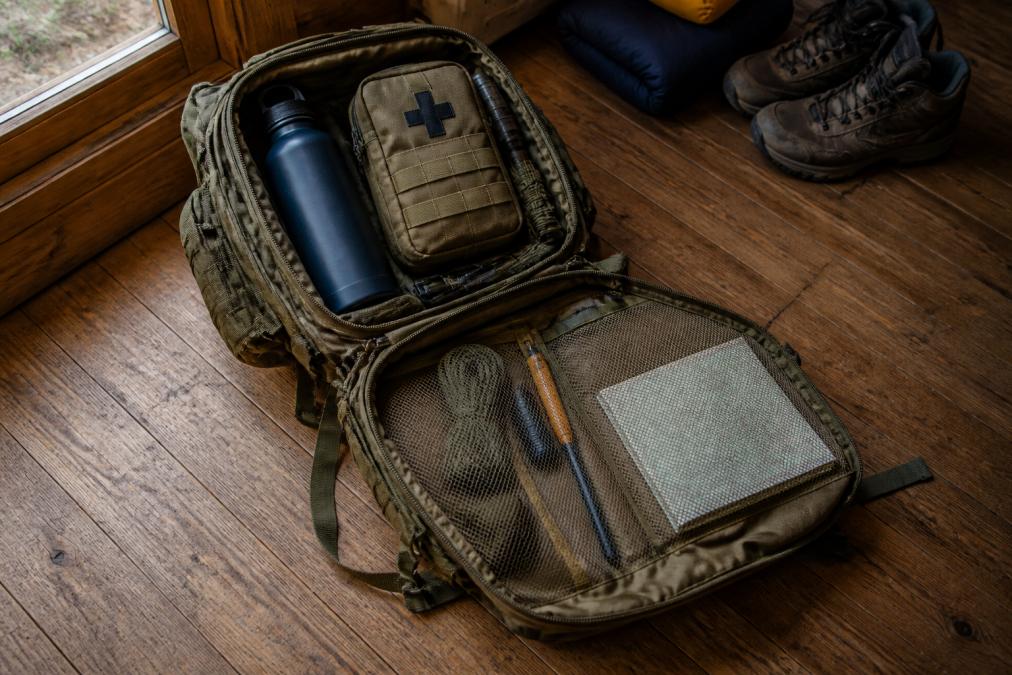
A common mistake is packing a bag too heavy to carry for miles. Aim for 20-25 pounds (excluding water) for three days of self-sufficiency (ready.gov). If your bag exceeds that, find lighter, multi-purpose alternatives.
Weight Distribution and Comfort
Poor weight distribution causes discomfort or injury. Place heaviest items (water, food) high and close to your back, centered between shoulder blades, so a padded waist belt transfers most weight to your hips.
Adjust all straps before heading out. Shoulder straps should be snug but not dig in; load lifter straps should angle back 45 degrees. A properly fitted pack makes a heavy load manageable.
Organization and Accessibility
Organization determines whether a bag is useful or frustrating. Access critical items (first aid, headlamp) without unpacking everything. Use compartments and pouches to group similar items: medical, fire starting, tools.
Place items you need in a hurry (whistle, knife, signal mirror) in external pockets or on a waist belt. Rarely-used items (clothes, tarp) go deeper in the main compartment. This prevents frantic digging in emergencies.
Top Online Retailers for Survival Gear
The retailer you choose is as important as the gear itself. The best stores act as curators, testing and standing behind their products.
Adventurers Pulse: Curated Tactical Gear and Backpacks
Adventurers Pulse earns top pick status through focus on durability, comfort, and performance. It is a curated selection of tactical backpacks, survival tools, and outdoor equipment engineered for mountain trails, forest campsites, and off-grid adventures.
Adventurers Pulse emphasizes gear you can trust in any environment. Rather than stocking hundreds of mediocre items, it offers a tighter range of high-performance pieces vetted for real-world use. You skip trial-and-error and start with equipment that will not let you down.
Self Reliance Outfitters: Bushcraft and Field-Tested Tools
Self Reliance Outfitters specializes in bushcraft tools: knives with proper steel, ferrocerium rods, and durable stainless steel containers. Gear is vetted by people who understand field reliability.
Their selection is narrow by design. If you need general emergency preparedness rather than bushcraft skills, inventory may be limited. For those seeking professional-grade cutting tools or fire kits, the value is excellent.
Stealth Angel Survival: All-in-One Emergency Kits
Stealth Angel Survival offers pre-assembled emergency kits for those starting from zero. Their kits provide a solid baseline without component research. They also carry tactical backpacks and modular storage for custom builds.
Pre-packed kits are convenient but may contain generic components. Beginners can start here, then upgrade pieces over time as needs become clear.
Survival Frog: Long-Term Storage and Consumables
Survival Frog specializes in long-term consumables: premium canned meats, long-term food supplies, and portable water filtration systems for off-grid living.
Their Buyers Club membership offers exclusive discounts on future purchases, valuable for regular food storage rotation. Note that shipping times can vary based on inventory, so plan ahead.
BUDK: Budget-Friendly Tactical Selection
BUDK offers a massive catalog of tactical gear at budget prices. Their price-match guarantee with an additional 5% discount benefits deal hunters.
Quality varies significantly across product lines. Research individual items and read reviews carefully. BUDK is best for informed buyers comparing options across many prices.
| Retailer | Best For | Core Strength | Watch Out For |
|---|---|---|---|
| Adventurers Pulse | Curated, durable gear for all levels | Vetted durability and comfort | Smaller catalog than generalists |
| Self Reliance Outfitters | Bushcraft specialists | Expert-vetting of cutting tools | Narrow inventory |
| Stealth Angel Survival | Beginners needing a full kit | Convenient pre-packed options | Generic components in some kits |
| Survival Frog | Long-term food storage | High-quality consumables | Variable shipping times |
| BUDK | Budget shoppers | Massive selection, price match | Inconsistent quality across lines |
How to Verify Quality Before You Buy
Since you cannot test gear in person, scrutinize materials and specifications on the product page. For a knife, look for specific steel type (1095 high carbon, S30V) rather than vague claims. For a backpack, check fabric denier for thickness and durability.
Next, look for independent reviews from sources other than the retailer’s own website. Search for field tests on forums or YouTube channels dedicated to bushcraft and survival. Guidance on consumer product safety and recalls can also help you check whether a specific item has been subject to any safety notices. Finally, examine the retailer’s return policy. A store that stands behind its gear with a fair return policy demonstrates confidence in its products, while a strict no-returns policy on survival gear is a warning sign.
Individual Tools vs. Pre-Made Kits: Which Approach Wins
For beginners, a pre-made kit from a reputable retailer like Stealth Angel Survival is a practical starting point. The risk is that component quality may vary and some items may need upgrading sooner than expected.
Experienced outdoors people should select individual tools to optimize for weight, quality, and preference. The hybrid approach, buy a quality base kit, then upgrade the weakest components over time, combines convenience with performance.
Choosing the right survival gear is a process of informed decision-making, not impulse buying. The challenge is filtering out the unreliable options and investing in equipment that will perform under pressure. Adventurers Pulse simplifies this by offering a curated selection of tactical backpacks and survival tools engineered for durability and comfort, so you can skip the guesswork and go prepared with gear you can trust. Explore the collection and build a kit that supports your next adventure with confidence. Get started with Adventurers Pulse and gear up for what lies ahead.
Frequently Asked Questions
What should I look for when buying reliable survival gear online?
Prioritize durability, weight-to-utility ratio, and field-tested reliability. Check for weatherproof materials, heavy-duty construction, and compact design. Read reviews from users who’ve tested gear in actual wilderness conditions. Verify that tools serve multiple purposes, multi-tools, for example, reduce pack weight while maintaining functionality. Look for retailers that specialize in survival equipment rather than general outdoor retailers, as they curate gear for real-world reliability.
Is it better to buy individual survival tools or pre-made kits?
Pre-made kits suit beginners because they provide structure and ensure you don’t miss essentials. However, individual tools let you customize for your specific scenarios and priorities. Many experienced preppers start with a kit, then swap components based on field testing. Consider your experience level: beginners benefit from kits, while those planning multi-day wilderness trips often prefer selecting individual high-performance items that match their exact needs and weight constraints.
How can I test survival gear before committing to a full kit?
Start with weekend trips near home using new gear to identify weaknesses before remote adventures. Test fire starters in different conditions, check backpack comfort during actual hikes, and verify water purification systems work as advertised. Many retailers accept returns, so purchase individual items first and test them in your intended environment. This approach also reveals which gear you’ll actually use versus what sounds impressive but doesn’t fit your style.
What are the essential items for a beginner’s survival kit?
Core essentials include a reliable multi-tool, fire starter (ferrocerium rod or lighter), water purification method (filter or tablets), first aid kit, emergency shelter (tarp or bivy), navigation tools (map and compass), signaling device (whistle), and emergency rations. Add a tactical backpack with proper weight distribution and organization. For beginners, pre-assembled kits from retailers like Stealth Angel Survival provide these items together, reducing decision fatigue while ensuring nothing critical is missed.
How do I know if survival gear will actually last through multiple trips?
Look for gear with heavy-duty materials, sealed seams, and reinforced stress points. Check retailer reviews specifically mentioning durability after multiple uses. Ask about warranty policies, brands confident in durability offer extended coverage. Start with one or two items, use them intensively, and evaluate longevity before investing in a full kit. Gear that fails on a weekend trip reveals problems before critical wilderness situations.
This article was written using GrandRanker




0 Comments