
Table of Contents
- Understanding Backpack Capacity and Pack Sizing
- Suspension Systems and Load Distribution
- Material Durability: What Is Denier in Backpacks
- Ventilation, Weight, and Ergonomic Design
- How to Maintain Hiking Gear for Long-Term Durability
- Durability vs. Weight Trade-offs and Testing Standards
- Choosing the Right Backpack for Your Adventures
- Conclusion
- Frequently Asked Questions
Last Updated: September 2, 2026
Understanding Backpack Capacity and Pack Sizing
Choosing the right capacity is the foundation of any successful camping trip. Pack volume determines what you can carry and how comfortably you’ll move. Most outdoor enthusiasts underestimate how much volume they actually need, leading to either overpacking or underpacking.
Matching Volume to Trip Duration
A durable camping backpack should match your trip length precisely. Overnight and weekend trips typically require 40-50 liters. Three to four-day trips need 50-65 liters. Week-long expeditions demand 65-85 liters. Extended trips beyond a week often require 85+ liters.
Underestimate by 10 liters and you’re either leaving gear behind or strapping it to the outside of your pack, creating weight distribution problems. Overestimate significantly and you’ll fill the extra space with unnecessary items, adding weight that compounds across miles of hiking. A loaded pack exceeding 20-25% of your body weight stresses frame components and suspension systems.
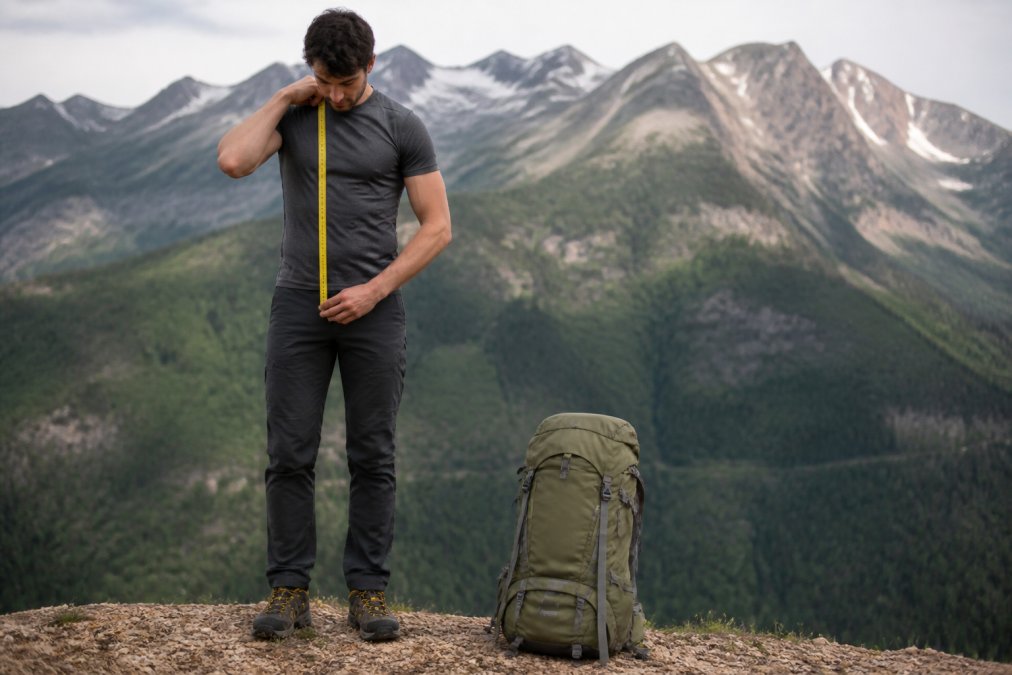
Measuring Torso Length for Proper Fit
Pack capacity means nothing if the backpack doesn’t fit your body. Torso length is the critical measurement that determines whether a pack’s suspension system aligns with your spine and distributes load correctly.
To measure your torso length accurately, locate the base of your neck where the C7 vertebra protrudes. Measure straight down to the top of your hip bones. This distance, typically ranging from 16 to 22 inches, determines which pack size within a given capacity range will work for you.
Most quality backpack manufacturers offer multiple torso lengths within the same capacity. Choosing the wrong torso length creates discomfort, reduces load stability, and forces your body into unnatural positions during long hikes. Over multiple days, this leads to back pain and shoulder strain, stressing frame and suspension components in ways they weren’t designed to handle.
Suspension Systems and Load Distribution
The suspension system is where engineering meets durability. It’s the framework that connects your body to the load, determining whether a backpack distributes weight efficiently or creates pressure points that wear down both the pack and your body.
A well-designed system transfers 70-80% of the load to your hips, the strongest part of your body, leaving only 20-30% on your shoulders (peer-reviewed research).
Internal Frame vs. External Frame
Internal frame backpacks have a rigid structure, typically aluminum stays or composite sheets, built inside the pack body. This design keeps the load close to your back, improving balance and stability on technical terrain. The durability advantage lies in stress distribution: the frame absorbs impact and flexing, protecting seams and fabric from repetitive strain. However, cheap internal frame packs fail at connection points where the frame connects to the pack body.
External frame backpacks have the frame structure mounted on the outside. This design creates space between the frame and your back, improving ventilation and making packs easier to load. The durability trade-off is different: stress is distributed across more of the pack’s surface, but the frame itself is more exposed to damage. Impact and abrasion can bend or crack external frames, and attachment points are more vulnerable to failure.
For most backpackers, internal frames offer better long-term durability because frame damage is less visible until it’s catastrophic. External frames fail more gradually, which is actually an advantage, you see the problem coming and can repair it before the pack becomes unusable.
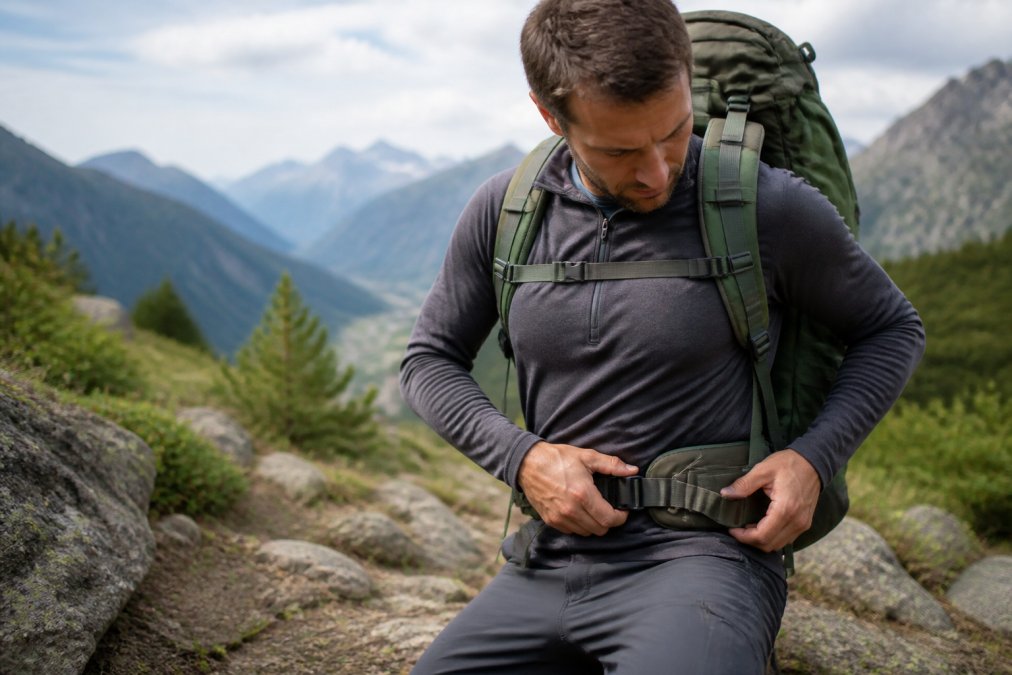
Hip Belt and Load Lifter Adjustment
The hip belt is where most of the load transfers from pack to body. A properly adjusted hip belt sits on your hip bones, not your waist, allowing your pelvic structure to carry the weight. When properly tightened, it should hold about 70% of the total load.
Load lifters are the straps running from the top of the pack to your shoulders, angled downward. Properly adjusted load lifters should sit at roughly a 45-degree angle. Incorrectly adjusted load lifters create uneven stress on the pack’s shoulder harness, leading to stitching failure, strap tearing, and frame bending over time.
Material Durability: What Is Denier in Backpacks
Denier measures the weight in grams of 9,000 meters of yarn. Higher denier means thicker, heavier, more durable fabric. A 500-denier fabric is lighter and more flexible than a 1000-denier fabric, but it’s also less resistant to abrasion and tearing.
Understanding denier is crucial because it directly correlates with durability. A backpack made from 500-denier nylon will weigh less and cost less, but it will also wear through faster under rough conditions. A backpack made from 1050-denier or higher will be heavier and more expensive, but it will outlast lighter packs by years. However, higher denier isn’t always better, a 1050-denier fabric that’s poorly constructed will fail faster than a well-made 500-denier pack.
Ripstop Nylon and Abrasion Resistance
Ripstop nylon is a woven fabric with reinforced grid patterns that prevent small tears from spreading. When a tear occurs in ripstop, the grid pattern stops the tear from expanding, making it significantly more durable for backpacks.
Most quality camping backpacks use ripstop nylon in the 400-1050 denier range. The thicker ripstop fabrics (800+ denier) provide exceptional abrasion resistance for rough terrain and extended trips. Real-world durability testing shows that ripstop nylon at 700+ denier maintains its integrity through hundreds of miles of hiking (peer-reviewed research). Below 500 denier, most backpacks show visible wear after 200-300 miles of use (peer-reviewed research).
Weather-Resistant Coatings and Seams
Weather-resistant coatings protect fabric from moisture while allowing breathability. Most durable camping backpacks use polyurethane (PU) or silicone coatings on the interior of the fabric. The quality of the coating directly affects durability: a thick, well-applied PU coating will last 5+ years of regular use, while a thin or poorly applied coating degrades within 1-2 years.
Seams are where backpacks most commonly fail. Quality backpacks use reinforced stitching with multiple passes of thread, creating seams that can handle extreme stress. Seam sealing, applying a waterproof tape or adhesive over stitched seams, adds durability and weather resistance. A properly sealed seam can handle moisture exposure that would cause an unsealed seam to fail.
Ventilation, Weight, and Ergonomic Design
Comfort and durability are intertwined. A backpack that doesn’t ventilate properly creates excess heat and moisture, which accelerates material degradation. A backpack that distributes weight inefficiently stresses frame components and seams.
Back Panel Ventilation and Moisture-Wicking
Back panel ventilation keeps air flowing between your back and the pack, reducing sweat buildup and heat. Modern backpacks use mesh back panels, curved or contoured designs that follow your spine’s natural shape, or foam padding with open-cell structure that breathes better than dense foam.
Moisture-wicking fabrics pull sweat away from your skin toward the pack’s exterior, where it can evaporate. High-quality backpacks combine ventilation and moisture-wicking to minimize sweat accumulation. Moisture trapped inside a pack accelerates mold growth, degrades adhesives used in seam sealing, and weakens fabric fibers. A backpack with excellent ventilation stays drier inside, extending the lifespan of all components.
Base Weight and Load-Carrying Efficiency
Base weight is the weight of the empty backpack. A lighter base weight means you’re carrying less pack weight, leaving more capacity for actual gear. The trade-off between weight and durability is real: lighter packs are often made from thinner materials or less strong construction.
A casual weekend camper who carries 30 pounds total might prefer a lighter pack with less strong construction. An expedition backpacker who carries 50+ pounds needs a heavier, more durable pack that can handle the stress. Choosing a pack that’s too light for your intended load creates premature failure.
How to Maintain Hiking Gear for Long-Term Durability
A durable camping backpack requires active maintenance. Even the best-constructed pack will fail prematurely if neglected.
Field Repairs and Repairability
Field repairs keep your pack functional during trips. Small tears, broken zippers, and loose straps can be fixed temporarily with duct tape, cord, or spare fabric. Quality backpacks are designed with repairability in mind: straps are replaceable, zippers can be swapped out, and frame sheets can be removed and replaced.
When evaluating a durable camping backpack, ask whether individual components are replaceable. Can you buy replacement straps? Can you swap out a broken zipper? Packs designed for repairability last far longer because you can fix problems instead of discarding the entire pack.
Cleaning and Storage Best Practices
Proper cleaning removes dirt, salt, and organic material that accelerate degradation. After each trip, rinse the backpack with fresh water to remove salt and debris. For stubborn dirt, use a soft brush and mild soap. Avoid harsh chemicals or high-pressure water, which can damage coatings and seams.
Allow the pack to dry completely before storing. Damp packs develop mold and mildew, which permanently damage fabric. Air dry in a shaded location; direct sunlight can degrade certain materials. Store backpacks in cool, dry places away from direct sunlight. Avoid hot garages or humid closets, where temperature and moisture swings accelerate material degradation. Stuff the pack loosely with paper or cloth during storage to maintain its shape.
Durability vs. Weight Trade-offs and Testing Standards
The relationship between durability and weight defines backpack design. A 2-pound backpack uses thinner materials and simpler construction than a 3-pound pack. The lighter pack is better for ultralight backpacking, but it’s also less forgiving if you overload it or use it roughly.
There’s no universal “best” answer. The right choice depends on your actual use. If you take weekend trips with moderate loads, a lighter pack works fine. If you take extended trips with heavy loads or rough conditions, a heavier, more durable pack is the better investment.
Testing standards for backpack durability are informal compared to other gear. The most reliable durability indicator is real-world user feedback over years of use. A pack that users report lasting 5+ years with regular use is genuinely durable.
Adventurers Pulse focuses on packs that balance durability and weight appropriately for their intended use. Our tactical backpacks prioritize durability over weight savings because our customers expect gear that performs in demanding conditions. We use higher denier fabrics, reinforced seams, and replaceable components, design choices that add weight but extend lifespan.
Choosing the Right Backpack for Your Adventures
The decision ultimately comes down to matching pack specifications to your actual use. Consider these factors in order of importance:
Trip duration and load weight determine the capacity and frame robustness you need. A 40-liter pack isn’t appropriate for week-long trips, and a 70-liter pack is wasteful for weekends.
Your torso length determines which pack sizes will fit properly. Measure accurately and prioritize fit over capacity.
Material durability depends on your terrain and conditions. Rocky terrain and rough conditions require higher denier fabrics and reinforced construction.
Suspension system quality affects both comfort and longevity. Internal frames offer better durability for most users.
Ventilation and ergonomics matter for multi-day trips. A backpack that doesn’t fit your body properly will fail prematurely from stress concentration.
Repairability determines whether you can extend the pack’s lifespan through repairs. Choose packs with replaceable components.
The relationship between price and durability isn’t perfectly linear. A $300 pack isn’t always more durable than a $200 pack. But a $100 pack is almost certainly less durable than either. Quality construction, proper seam sealing, reinforced stress points, and higher denier fabrics cost more. You can find good value in the $200-400 range, where manufacturers balance cost and quality effectively.
| Consideration | Weekend Trips | Week-Long Trips | Extended Expeditions |
|---|---|---|---|
| Capacity | 40-50L | 55-70L | 70-85L+ |
| Frame Type | Internal or external | Internal preferred | Internal required |
| Material Durability | 500-700D adequate | 700-1000D recommended | 1000D+ required |
| Weight Priority | Moderate | Lower | Lowest |
| Ventilation Importance | High | High | Moderate |
Conclusion
A durable camping backpack isn’t about choosing the most expensive option or the lightest weight. It’s about matching specifications to your actual needs and understanding how materials, construction, and design affect longevity.
Focus on torso length fit first, nothing else matters if the pack doesn’t sit on your body correctly. Prioritize material quality and seam construction, which determine whether your pack will last years or fail in months. Choose a suspension system appropriate for your terrain and plan for maintenance and repairs as part of pack ownership.
At Adventurers Pulse, our backpacks use reinforced ripstop nylon, sealed seams, and internal frame designs that distribute load efficiently and resist failure under demanding conditions. We design for repairability, so you can extend your pack’s lifespan through component replacement rather than discarding it.
When you’re ready to invest in a backpack that will serve you reliably for years of adventures, shop Adventurers Pulse and discover gear engineered for durability, comfort, and performance.
Frequently Asked Questions
Q: What capacity should I choose for a multi-day camping trip?
A: For weekend trips (2-3 nights), a 40-50L pack typically works well. The 20% rule suggests your gear should not exceed 20% of your body weight, a helpful baseline for load distribution. For longer trips, you may need 60L or more. Torso length matters as much as volume; a well-fitted smaller pack beats an oversized one that doesn’t sit properly on your hips.
Q: How does denier rating affect backpack durability?
A: Denier measures fabric weight and thickness, higher denier means thicker, more durable material. A 500D ripstop nylon resists tears better than 200D fabric, but weighs more. For durable camping backpacks, 500D-1000D in high-stress areas (bottom, straps) balances durability and weight. Lower denier works for ultralight packs if you prioritize weight over maximum durability.
Q: What makes a backpack suspension system high-quality?
A: Look for an internal frame with a padded hip belt that transfers 65-80% of weight to your hips, not shoulders. Load lifters (straps connecting pack to shoulder harness) should adjust easily. The frame sheet should be rigid enough to support your load without flexing. A well-designed sternum strap keeps shoulder straps in place, reducing strain on injured shoulders or weak points.
Q: How do I maintain a camping backpack to extend its lifespan?
A: After trips, empty completely and air-dry in shade, never direct sunlight, which degrades fabric. Spot-clean with mild soap and water; avoid machine washing unless the pack is specifically designed for it. Check seams and zippers regularly for damage. Store in a cool, dry place away from moisture and pests. Field repairs using a patch kit prevent small tears from becoming major failures on remote trips.
Q: Should I prioritize weight or durability when choosing a backpack?
A: This depends on your trips and physical condition. Ultralight packs (under 2 lbs base weight) reduce fatigue on long treks but may sacrifice durability for multi-year use. Standard packs (3-4 lbs) offer better abrasion resistance and repairability. If you hike frequently or carry heavy loads, durability pays off over time. Shoulder injuries or age may favor lighter packs regardless of durability trade-offs.
Q: How do I know if a backpack is good quality before buying?
A: Check for reinforced stitching at stress points (shoulder straps, hip belt attachment). Examine fabric denier and ripstop construction. Test the suspension system’s adjustability and frame rigidity. Read reviews mentioning multi-year use and field repairs. Look for weather-resistant coatings and sealed seams. Quality brands publish durability testing protocols; reputable manufacturers stand behind their gear with repair services or warranties.
Q: What’s the difference between a 30L and 40L backpack?
A: A 30L pack suits weekend trips (1-2 nights) with minimal gear; a 40L handles 2-3 nights comfortably. The choice depends on trip length, season (winter requires more layers), and personal packing efficiency. Torso length and hip belt fit matter more than raw capacity, a well-fitted 30L beats a loose 40L. Consider your typical trip duration and whether you’ll carry water, cooking gear, or camping equipment.
Q: Why is torso length measurement critical for backpack durability?
A: Proper torso length ensures the hip belt sits on your iliac crest (hip bone), transferring weight efficiently to your legs rather than straining shoulders. Incorrect fit causes shoulder and back pain, leading to poor posture and potential injury. A backpack that fits your torso length distributes load evenly, reducing stress on seams and straps, which extends the pack’s lifespan and your comfort on multi-day trips.
This article was written using GrandRanker




0 Comments